The Neuropsychology of Disgust: How the Feeling of Disgust Made Us Human
When reading an article about disgust, there’s a good chance you’ll experience that very emotion. You can test this as early as the first paragraph. However, perhaps the ambiguity of this emotion and the curiosity we still secretly feel toward the repulsive will help us navigate the evolutionary jungle and trace the path that the feeling of disgust has taken in our development, as well as discover how, by reacting with disgust to everything unclean and contagious, our ancestors shaped the neural circuits in the brain that are responsible today for morality, manners, recognition, and laws.
In one of the chapters of the book This Is Your Brain on Parasites (2016), Kathleen McAuliffe recounts the following incident. A young man lost his virginity by having sex with his dog. Afterward, their relationship remained good; the dog didn’t seem to mind at all. But the young man’s conscience began to trouble him, and he wanted to know whether he had acted immorally. He wrote a letter about this to David Pizarro, a professor of moral psychology at Cornell University in New York.
Although Pizarro is a recognized expert on ethics, it wasn’t easy for him to respond to the young man. In the end, he replied:
“I wouldn’t say it’s a violation of moral norms, but in our society, you’ll have to deal with people who consider such behavior bizarre—because it really is bizarre. People don’t want to hear about it. For example, would you want your daughter to date someone who had sex with their dog? The answer is no. And what’s also important is that there are no animals who file complaints about cruel treatment by the people they love. I would use that as a starting point for my reflection.”
Essentially, Pizarro was saying that the young man’s behavior was strange and disturbing, but he didn’t want to condemn him. And if you’re outraged by this, then you’re probably just repulsed by the very image of such a person. But does that mean he’s immoral? After all, at least according to the young man, the dog wasn’t harmed.
But if, on the contrary, you’re trying your hardest to understand why this person’s behavior seems wrong to anyone, your confusion is also understandable; psychologists would say that you’re experiencing moral shock.
Pizarro and other researchers currently agree on one thing: moral judgments are not the result of careful deliberation. We make a decision first, and then, according to Jonathan Haidt, a social psychologist at New York University, we construct a subsequent rationale for our feelings. In other words, we possess a kind of intuition and somehow sense that, even if no one has been harmed, a certain behavior is wrong for some reason. This is the work of the emotion of disgust.
It is precisely this disgust, accompanied by exclamations like “Eww!” and “Yuck!”, that causes us to immediately recoil from filth, bedbugs, leeches, and anything else that might harbor germs. This emotion evolved to ensure our survival by keeping us at a safe distance from what is harmful.
Paul Ekman, a psychologist and professor at the University of California, San Francisco, describes the phenomenon of disgust as a manifestation of aversion to taste, smell, sight, sound, touch, or any repulsive visual images or fantasies. The most powerful triggers are the byproducts of our bodily functions—feces, vomit, urine, mucus, and blood.
Another psychologist, Paul Rozin, who has studied disgust specifically, says that the basis of this feeling is the sensation in the mouth (or the fantasy of it) of something that we already consider disgusting or contagious. Yet another researcher, Gordon Allport, proposed a thought experiment to better understand the mechanism of this emotion:
“Try swallowing the saliva that has built up in your mouth. Now, first think about the fact that it has built up, and then swallow it. To enhance the effect, imagine that you’re spitting it into a glass and then drinking it!”
This experiment shows that what seemed natural and “familiar” suddenly becomes repulsive and foreign. Rozin makes the bold claim that as soon as a product of our body’s activity leaves our body and comes into contact with the external environment, it becomes repulsive to us.
Disgust as a fully formed emotion appears in children between the ages of four and eight. Before this age, we observe only reluctance or refusal to eat food they don’t like, but not disgust. Infants and very young children do not yet understand that an object might resemble something repulsive. For example, they might easily eat a chocolate candy shaped like feces or calmly drink juice even if you deliberately drop a plastic bug into it. It is only around the ages of three or four, as they develop personal hygiene habits and encounter their parents’ prohibitions and demands not to perform certain physiological acts in public, that they become acquainted with the emotion of disgust.
Perhaps in an attempt to cope with the feelings of anger and protest that accompany these prohibitions, as they enter adolescence, they often take an exaggerated interest in things that provoke disgust. They may be fascinated by these disgusting toys: plastic imitations of vomit or mucus, stink bombs, or fart toys. But even as adults, people show an interest in the repulsive; they sometimes find it difficult to look away from images of disasters, blood, or various injuries. And our own bodily secretions throughout our lives are a subject of constant interest. Recall how many people carefully examine their handkerchief after blowing their nose, as Paul Ekman points out in The Psychology of Emotions.
Wikimedia Commons
It is important to note that disgust can manifest in a veiled form—as contempt. Unlike disgust, the feeling of contempt is always directed at another person. Contempt can only be directed toward people or actions, but not toward tastes or smells. It is usually associated with a sense of inequality and a reluctance to adapt to something. By expressing an element of such disdain in one’s aversion to people and actions, one can feel a sense of superiority (usually moral) toward them.
Thus, according to Rozin, there is a distinction between basic (visceral) disgust and interpersonal disgust. Basic visceral disgust can be described as an evolutionary intuition regarding situations involving contact with dangerous microbes. As for interpersonal disgust, Rozin lists four trigger situations for this emotion: toward strangers, the sick, the unfortunate, and the morally corrupt. Paul Ekman adds a fifth trigger to these—disgust stemming from oversaturation—and cites an example from a study of the behavior of husbands and wives in conflict situations. In many cases, the wife’s disgust arose when the husband tried to put up a “wall of stone” between them, ignoring her emotions. The wife found herself overwhelmed, fed up to the brim with her own negative feelings toward him.
In close relationships, we are usually less sensitive to what causes us disgust. For example, when caring for a child, parents overcome or do not even feel disgust toward the child’s bodily waste, and this is a hallmark of unconditional parental love. A temporary reduction in disgust is also observed during sex if it results from mutual attraction.
“Another person’s tongue in your mouth can be a sign of intimacy, but it can also be a repulsive insult.”
This mutual violation of boundaries protected by the feeling of disgust—which implies physical and emotional exposure—is love, which “grants another person the privilege of seeing us in a way that would make us feel ashamed and would provoke disgust in other people were it not for this intervention of love,” notes P. Ekman. Thus, the social function of disgust is to create conditions for intimacy. Its other social role is to create distance from everything that is disgusting and repulsive.
Different cultures have different notions of what is considered disgusting, contagious, or repulsive. And even within a single culture, there can be significant disagreements on this matter. And, unfortunately, the emotion of disgust can sometimes be dangerous.
David Pizarro notes that we cannot fully trust disgust when using it as a moral compass. For example, condemning homosexuality on the grounds that it is disgusting.
“As a heterosexual man, I’ll say that if you show me photos of sexual intercourse between two men, I’ll most likely feel disgust,” says Pizarro. “But it’s more important to ask: How on earth does that relate to my ethical convictions? For example, I might also find the thought of two very ugly people having sex repulsive. But that doesn’t compel me to push for legislation banning all ugly people from having sex.”
Homeless people are another group that evokes disgust. Because of the sense of revulsion we feel toward them, it’s easy for us to dehumanize them, and then, for example, it’s easier for us to blame them for crimes they didn’t commit.
Pizarro knows how important it is not to let disgust seep into ethical judgments. He notes:
“My ethical duty is to ensure that the emotion of disgust does not influence me to the point of losing my humanity.”
This conviction has allowed him to focus on how emotions can shape our ideas about what is moral and immoral.
If you’re still skeptical that microbes have a direct bearing on your moral principles, consider this: would we remain true to our moral principles if there were a risk of infection nearby?
In an experiment by Simon Schnall, a social psychologist at the University of Cambridge, participants were asked to consider cases of morally questionable behavior: for example, whether it is ethical to lie on a resume, not return a stolen wallet, or resort to cannibalism to survive a plane crash. Participants sitting at dirty tables stained with food and gum were generally more judgmental than students sitting at spotlessly clean tables.
Studies in which the presence of unpleasant odors in the room was an additional condition yielded similar results. Premarital sex, bribery, pornography, unethical journalism, marriage between first cousins… Participants in rooms where an unpleasant odor was sprayed were subsequently more likely to endorse biblical truths than those who did not inhale unpleasant odors during the experiment.
This pattern is also evident in how we perceive messages. Two groups of participants were given different versions of the same text. Those who read the version containing words that evoke disgust (“accept” and “often”) were more skeptical in their responses than those who read a nearly identical story without the suggestive phrases. When asked later to explain their distrust of the story’s protagonist—the student council president—the participants offered a variety of rationalizations unrelated to disgust.
Returning to the risk of infection, it should be noted that if people are reminded of the threat of an infectious disease, they will be more inclined to adhere to traditional values and follow religious prohibitions, and will express greater disdain for those who violate social norms.
When we are afraid of becoming infected and falling ill, we not only revert to being children seeking maternal care, but we also adopt her beliefs about how one should behave to avoid infection. This is particularly noticeable in the social sphere. When survival is at stake, we think: now is not the time to consider something new and untested or to embrace a new philosophy of life; it is better to resort to tried-and-true, safe practices.
It’s no surprise that politicians seek to exploit this knowledge of disgust for their own gain. The most notable example is the advertising campaign by conservative Party activist Carl Paladino during the 2010 Republican gubernatorial race in New York. A few days before the election, registered voters in his party opened their mailboxes to find pamphlets scented like a landfill. The slogan read:
“Something really stinks in Albany.”
The flyers featured photographs of Democrats who had recently been implicated in a corruption scandal. In the first round, this worked in Paladino’s favor.
Just recently, during the Democratic primaries, Donald Trump described Hillary Clinton’s extended bathroom break as “too disgusting to talk about,” and the crowd erupted in laughter and applause.
The fear of germs literally forces people to think of morality in black-and-white terms. It’s no coincidence that fairy godmothers wear white and wicked witches wear black. Gerald Llor of Harvard and Harry D. Sherman of the University of Virginia have shown that we associate dark colors with dirt and disease. But did improvements in infection prevention really cause the human mind to associate black with sin and white with virtue? If so, should people who associate white with morality and black with immorality be more concerned about cleanliness and more afraid of germs? These are questions that remain to be answered.
The tendency to associate black with something negative is particularly pronounced in situations involving moral choices, such as in a courtroom. In such cases, bias against the defendant is most pronounced. And this is troubling news for people with dark skin who hope for a fair trial.
So how did germs manage to sneak unnoticed into our moral code and influence our moral judgments? Some scientists believe the secret lies in how the neural connections in our brains are wired. Basic visceral disgust is that part of us that wants to scream “Ew!” at the sight of an overflowing toilet or a cockroach in our food. At that moment, the anterior insula—the part of the brain responsible for primitive emotions and regulating the gag reflex—is activated. However, that same part of the brain also lights up when it comes to justice, when test subjects are outraged by cruel or undeserved mistreatment of others. But this does not mean that basic visceral and later moral disgust are hardwired together in our brains; no, they merely activate the same region, so perhaps this contributes to a distortion of judgment.
Although there are flaws in the design of our neural hardware that affect our sense of morality, there are still many amazing things about it. In a well-known study conducted by a group of psychiatrists and political scientists led by Christopher T. Dows of New York University, participants were asked to play a game in which they would divide the winnings among themselves. The anterior insula became active in one participant at the moment he made a decision regarding fairness—he chose to forgo his own winnings in order to redistribute the money between the players with the highest and lowest winnings (a Robin Hood impulse). As other studies have shown, the anterior insula also lights up when a player feels they have been offered an unfair deal in a high-stakes game. Furthermore, it becomes active when a person decides to punish selfish or greedy players.
This has led neuroscientists to characterize the anterior insula as responsible for prosocial emotions—empathy, generosity, and cooperation—or, when a person harms others, for remorse, shame, and atonement. However, it is by no means the only area of the nervous system that processes both visceral and moral disgust. Some scientists believe that the greatest overlap between the two types of disgust may occur in the amygdala, another ancient part of the brain.
It is difficult to explain why basic and moral disgust have become intertwined in our brains, but Valerie Curtis of the London School of Hygiene & Tropical Medicine proposes a scenario that, while impossible to verify, certainly sounds plausible. Data from excavations of prehistoric sites suggest that our ancestors may have been more concerned with hygiene and sanitation than we realize. They used combs, and they had garbage dumps. Early humans viewed negatively those among their peers who were slovenly and did not dispose of their trash properly, who spat or defecated wherever they pleased, or who made no effort to comb lice out of their hair. These individuals exposed the group to risks ranging from unpleasant odors to epidemics. This behavior led to repulsive consequences; consequently, both the behavior itself and the person exhibiting it came to be associated with repulsiveness. Curtis believes that in order to force them to improve, the group shamed and condemned them, and if that did not produce the desired result, they were expelled. That’s exactly how we react to something dirty—we don’t want anything to do with it.
Since such reactions were necessary for survival, the neural circuits that evolved to combat microbes could easily adapt to serve a broader purpose—avoiding people whose behavior threatened the group’s health. In addition to this perspective, Curtis’s team found that people who are most afraid of unhygienic conditions are more likely to support putting criminals in prison and imposing harsh penalties on those who violate societal norms.
The British Library
Thus, human social development required more than a single rewiring of the same neural circuit to bring our species to a crucial point: we feel disgust toward people whom we perceive as behaving immorally. This is crucial to understanding how we became such an extraordinarily social and cooperative species, capable of pooling our brains to solve common problems, invent new things, use natural resources efficiently, and, ultimately, lay the foundations of civilization.
Curtis says:
“Look, there isn’t a single thing in your life that you could do on your own. The massive division of labor in modern societies incredibly boosts productivity. People’s capabilities today are hundreds of times greater than in the days of hunter-gatherers. The big question is: ‘How did we pull off this feat? How are we able to work together?’”
Explaining why we came to cooperate is no easy task. Indeed, this has puzzled many proponents of evolutionary theory. The crux of the problem is this: by nature, we are not altruistic. Here’s an example: you bring people into a research lab and ask them to play games with different rules in order to earn money. Among the participants, there are always greedy ones who wouldn’t mind if others walked away empty-handed. There are always those who will cheat if they think they won’t get caught, and so on. From countless repetitions of these experiments, it has become clear: people cooperate only when it costs them nothing to do so.
Today we have laws and a police force that enforce compliance with the rules. But these are modern inventions, and they are based on something more fundamental. However, today’s society might not exist if this force that unites us—namely, disgust—had not existed at some point in the past.
Charles Darwin believed that our social values might be based on the desire to earn praise or to avoid guilt or punishment. In fact, we care more about our reputation than whether we are actually right or wrong. It is important to us not to become a target of contempt—that very same ancient contempt that the group showed toward its outcast, the violator of hygiene rules. Contempt, which, according to Darwin, is synonymous with disgust, is a powerful deterrent. After all, in ancient times, expulsion from the group was tantamount to a death sentence. It is very difficult to survive in the wild on one’s own, relying solely on one’s abilities, courage, and resourcefulness. Natural selection favored cooperators who played by the rules.
Thus, disgust curbed selfish behavior, including that of those whose lack of hygiene threatened the group’s well-being, and, in other words, laid the foundation for technological progress.
Indeed, by being sociable, we gain a host of exceptional advantages—we can trade, exchange goods (including labor), form alliances, and share ideas. Working in close proximity to other people exposes everyone to infection, and to reap the benefits of cooperation without this enormous risk, we had to, in Curtis’s words, “dance this dance”: get close enough to cooperate, but not so close as to jeopardize our health and survival. We humans needed rules to achieve this delicate balance, and so we invented good manners.
Good manners are what set us apart from animals and allowed us to take the “first steps of a child” on the path to becoming civilized super-cooperators.
Indeed, it may be that the fact that we began to adhere to good manners provided us with a “great leap forward”—an explosion of creative innovation 50,000 years ago—as evidenced by findings at ancient sites: tools, jewelry, utensils, examples of rock art, and more. These were the first signs that people had begun to share knowledge and skills and would now be able to work together productively.
Translated by: S.V. Belukhina
Sources
1. “Disgust Made Us Human” / Aeon.
2. Paul Ekman, The Psychology of Emotions, 2nd edition, Piter, 2014
3. Kathleen McAuliffe, This Is Your Brain on Parasites (2016).
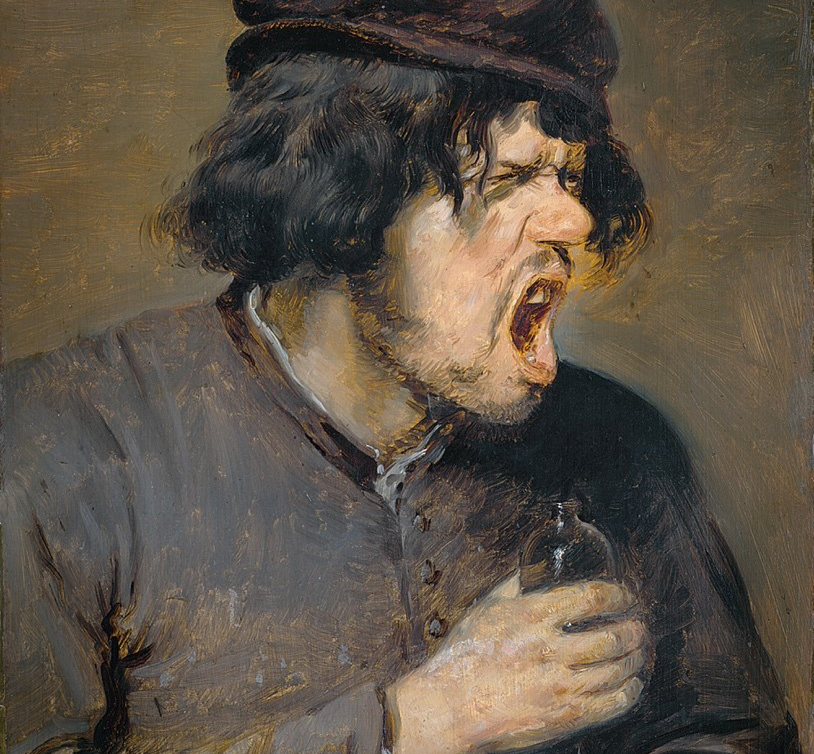
Cover: Detail from Adrian Brouwer’s painting “The Bitter Drink” (1630–1640).
Published in Monocle on March 24, 2018
Share Twitter WhatsApp Telegram VK Svetlana Belukhina