Organizational Coaching. So Where’s Daddy?
This work by Simon Western presents theoretical and methodological approaches to organizational consulting, with an emphasis on integrating the concepts of the paternal container and the paternal symbol into the classical Tavistock model of consulting, which is based on the concept of the maternal container.
The aim of this work is to directly address the challenges posed by the modern world, as well as to explore the application of the psychoanalytic method in contemporary consulting practice. The paper begins by examining the characteristics of the work of change agents (consultants, coaches, leaders) in modern organizations, as well as the difficulties they encounter in their daily practice, and the conclusion offers reflections on how all of this can help us better understand the phenomenon of leadership not only at the level of the modern organization but also more broadly—at the level of society as a whole. This work also raises complex questions about soft and hard leadership in the context of a rapidly changing, globally networked society.
INTRODUCTION
This article presents the theory and methodology of organizational consulting, emphasizing the importance of integrating the function of paternal containment and the paternal metaphor with the more familiar metaphor of the maternal container, which underlies the classical Tavistock model of organizational consulting.
In my management and consulting practice, I have used the Tavistock model, but from time to time I encountered certain difficulties that prevented me from moving forward. I believe the reason is that the Tavistock Institute was dominated by ideas from the Kleinian maternal matrix, while the paternal metaphor and the paternal symbol remained, as it were, on the sidelines for a long time (hence the title of my work, “So Where’s Daddy?”). In my view, this approach created a serious gap not only in the theoretical frameworks describing the application of psychoanalysis in organizations but also in the practice of counseling itself.
By analyzing my own work and the case studies of other consultants using the Tavistock approach, I was finally able to identify distinct patterns and pinpoint the common thread that unites these cases. This commonality was the Tavistock approach’s characteristic focus on internal defenses, especially those that coincide with Bion’s theory of basic assumptions (1961), as well as Kleinian theory (1959), which originated in the observation of children and placed great emphasis on envy, splitting, and projective identification.
The role of the organizational consultant was also occupied exclusively by a maternal position, mimicking that of the Tavistock group, according to whose principles the consultant must sit in silence for as long as possible and then offer a specific type of interpretive intervention.
Over a long period of time, we observed numerous similar conclusions and harmful “insights”—such as, for example, the assertion that splitting was present, or that the group was in the “fight-or-flight” or dependency stage of the basic assumption, or the conclusion that the leader needed to become more clearly aware of their leadership role. This didn’t really move things forward and led to frustration.
The Tavistock approach itself limited us. At the same time, when setbacks occurred, the blame was placed on the client, with attempts to attribute it to the client being stuck, overly dependent, or power-hungry and unable to accept the help offered. We encountered this kind of pseudo-understanding everywhere—in supervision sessions and at conferences on group work.
There was also a vast gulf between insight and intervention—perhaps as wide as that between psychoanalytic theory and its application. We inherited these problems from clinical practice, where insights themselves were the desired outcome of the work, while the actions the client or analysand might or might not take remained off-screen. In organizations, however, consultants, coaches, managers, and leaders are expected to do something different—to put insights into practice, to move from awareness to action, and to understand how to apply new self-awareness and organizational awareness to bring about concrete changes in the external environment.
In this paper, I attempt to demonstrate that psychoanalysis, when applied to organizational work such as consulting, coaching, human resources management, and leadership development, requires a new conceptual framework and a new methodological structure in order to breathe new life into the Tavistock Project, which, as we can see, is currently, in a sense, at a standstill (Armstrong, 2012; Krantz, 2010). Krantz writes:
Today, we find ourselves right in the midst of a rapidly advancing process of organizational transformation characterized by digitalization and globalization. A new model of social organization—with new rules, a new “grammar,” traditions, and practices—is completely reshaping the organizational landscape that has been familiar to us since the postwar era. As these changes take place, the constellation of new connections between the individual and the context in which he or she finds himself or herself will inevitably raise the question of how the system of psychodynamic thinking can remain viable and relevant.
Today’s networked global information society is the source of such sweeping social and organizational transformations that render old methods of management and counseling ineffective, and the new processes emerging in the social, political, and organizational contexts require us to have the courage not to turn a blind eye to what is happening, so that we can develop new effective approaches and new theoretical concepts.
In this article, I aim to remain faithful to the theoretical and methodological foundations of my earlier research (Western, 1999), which have since been confirmed by the results of various studies, stood the test of time, and crystallized through practical application. Most of this article will be devoted to this, and at the end I will briefly address two issues that arise from these circumstances and that will require further discussion:
Extending this theory beyond the confines of organizations to broaden society’s understanding of leadership, power, and authority, and to avoid the temptation to adopt new, modern models of authoritarianism.
An examination of the appropriateness of the psychoanalytic use of “gender” theories, as, for example, in this work, which also employs the terms “maternal” and “paternal.”
Integrating the paternal metaphor with the maternal matrix
Since the 1960s, we have witnessed a cultural shift away from institutions toward individuality and from a society of constraints toward a society of command efficiency (Stavrakakis, 2007).
At first, this resembled an adolescent’s maturing need to challenge existing power structures, a direct confrontation with paternalism and the power of the symbolic, controlling father. But then, as it became part of capitalist consumer society, the idea of liberation from constraints, freedom of choice, and the fulfillment of personal desires without guilt or shame (whether sexual or consumerist) became the dominant cultural norm.
In the modern world, the pursuit of unrestrained consumption has become a prerequisite for happiness (Beradi, 2009). It is assumed that happiness is possible only when we make up for what we lack (McGowan, 2013). This craving creates a need for a product or service that we believe can satisfy it, and the world of marketing is always on the lookout. When we feel a need, we experience a desire that leads to consumption. However, the promise of pure pleasure (Lacan)—the happiness derived from purchasing, for example, a car, perfume, the perfect massage, and so on—vanishes instantly after the fleeting moment of pleasure, and then a new need takes the place of the old one. “The Mercedes was magnificent, but my friend’s Ferrari is better”; the new fragrance was supposed to attract a soulmate into your life, as the ad promised, but no—you’re alone again and once more feel a sense of lack.
This need to be constantly happy is, paradoxically, the cause of the emergence of the so-called increasingly “dissatisfied subject,” since the fantasy of achieving pure joy and happiness is, after all, imaginary. In reality, this does not happen. The subject experiencing a lack (which, in Lacan’s theory, is a universal human experience) is constantly exploited by a society dominated by consumerism; the subject’s craving is constantly stoked, people are led astray, believing in the illusion that the existential sense of lack can be filled with something material—which, of course, is not the case. This illusion increases consumer demand, but at the same time is the cause of deep subjective dissatisfaction. Jaws clench as the merciless millstones of the life cycle grind on: “lack–desire–consumption–a moment of pleasure–a sense of emptiness–dissatisfaction and frustration from the sense of emptiness–even greater lack and greater desire”… The cycle repeats itself.
Strength of character, the Protestant ethic of thrift, and respect for authority—the church, politics, the monarchy, and so on—have given way to a widespread pursuit of pleasure. This is best illustrated by the famous “Coca-Cola Enjoy!” advertisement, which has been widely circulated around the world (Zizek, 2001).
In a consumer society, what we call unconscious pleasure has become accessible thanks to the transgression of the father’s law. The social covenant of “thou shalt not”—thou shalt not kill, thou shalt not steal, thou shalt not… commit adultery—opened up the prospect of deferred gratification or the anticipation of pleasure derived from violating these taboos. This contrasts with the norms of a society of collective pleasure, where you may constantly feel like you’re not quite right if you’re not having sex day and night, experiencing fantastic orgasms, possessing untold treasures, and possessing angelic beauty. This condition is presented as mandatory, broadcast via the internet, magazines, porn sites, and Hollywood movies, and is ubiquitous in both academic and pop culture.
From all this, we can see that the erasure of the “law of the father”—that is, the prohibition against immediate gratification—creates problems at the societal level, as well as on the subjective and organizational levels. In fact, I am not calling on us all to return to the 1950s, to a society of prohibitions and taboos; that would be a call to immerse ourselves in a nostalgic fantasy of an Edenic past. No.
My goal is to shed light on some contemporary challenges that imply certain sociocultural changes and to try to show how all of this affects our work with organizations.
When it comes to working with organizations, the shift away from patriarchal and hierarchical business models at the end of the 20th century, as well as the gradual disappearance of familiar corporate cultures with clear structures and well-defined relationships, led to a decline in the significance of the acronym BART—boundaries, authority, roles, and tasks—which was used in group work to guide leaders and consultants toward what is of paramount importance for an organization’s development.
Zygmunt Bauman (Bauman, 2000) refers to our era as a period of “liquid modernity,” when everything changes so rapidly and flows from one thing into another that boundaries, roles, and tasks become blurred and turn into multiple, intertwined parts of complex systems. The traditional understanding of the mechanisms of power and leadership has also been shaken, as the hierarchical pyramid has been dismantled.
As technological advancements and global transformations have shifted dynamics from vertical to horizontal, we must immediately seek new forms of interaction. In my early works, I wrote that “globalization, increasing complexity, and turbulence reflect the main themes of organizational change that we will have to face head-on. To operate effectively under these new conditions, new ways of thinking and new forms of organizational structure are necessary” (Western 1999).
This idea anticipated the dramatic changes in the social, political, and organizational spheres that have occurred since then, and I will argue that in many organizations—and even political systems—leaders’ ability to adapt to new conditions has not been sustained, in part due to the speed with which these changes have occurred.
Now let’s discuss the theory and methodology that underpin the need to integrate psychoanalysis into organizations, and later I will connect this to the sociopolitical context.
In the realm of theory
Parricide and Incest
The Tavistock approach to working with organizations is based on psychoanalytic object relations theory and, in particular, on the work of Melanie Klein, which was subsequently further developed in the writings of Wilfred Bion.
Both Klein and Bion focused on the importance of the mother-child relationship as a guarantee for the formation of a healthy psychic apparatus in the individual. Klein’s concept of projective identification (1959) implies that the child projects onto the mother those feelings that it cannot cope with and that would otherwise become toxic to it. The mother, possessing the psychological capacity to handle these feelings of the child, introjects them, contains them, and then offers them back to the child in a calmer and more digestible form.
Bion (1961) later discovered that these phenomena can also be observed in the dynamics of work groups. Halton summarized all these phenomena in the Tavistock model, designed for organizational consulting. Thus, this model represents a Bionian container-contained schema, rooted in the mother-infant relationship but applicable to a wide range of social relationships.
According to this model, during the consulting process, the consultant acts as a safe and reliable container for projections of deep-seated, invisible, yet very real collective anxieties that underlie various organizational processes. Then, like a symbolic mother, the counselor contains these anxieties and returns them to the individual or group in a form that allows them to be accepted, observed, and dealt with. (Halton, 1996, p. 3)
This model also applies to social institutions that serve as symbolic containers for society as a whole—political, social, and religious systems that accumulate within themselves projections and complex feelings affecting people on a global level (Obholzer, 1994).
As an admirer of the Tavistock model, which has proven its effectiveness in practice, I nevertheless began to notice over time that something was still missing here. By collaborating with colleagues working within the same paradigm, as well as examining practical case studies and familiarizing myself with the latest theoretical developments, I discovered what that shortcoming was.
When I examined object-oriented psychoanalysis through the lens of the Oedipal complex, I discovered that Freud, the father of psychoanalysis, who placed the father figure at the very center of psychoanalytic work, has now been virtually removed from view, and along with him, much of what might be called the paternal vector has also been erased.
In the field of psychoanalysis, Klein became the harbinger of the transition from a phallocentric to a breast-centered universe… There has been a shift from Freud’s classical psychoanalysis, which revolved around the Oedipal figure of the father, to contemporary psychoanalysis, at the center of which Klein placed the figure of the mother—the first “other” in the child’s psychic space (Hoggett, 1992, p. 4).
Psychoanalysis began with the influential father figure of Freud, who emphasized the centrality of the father’s role in the Oedipal complex, and the patriarchal atmosphere of turn-of-the-century Vienna, where he lived and worked, certainly influenced his ideas. But then psychoanalysis found a “strong mother” in Melanie Klein, who focused on the mother-child dyad. Following Klein, this young, developing object-relations school of psychoanalysis seemed to embody the image of a growing child enacting the Oedipus myth and committing patricide…
Steiner (1995) suggested that the phenomenon of turning a blind eye to… describes the very ambiguity that exists between conscious and unconscious knowledge of murder and incest in the Oedipal situation. So, in the Tavistock tradition, should we turn a blind eye to the elimination of the father in our work and the excessive idealization of the mother-child dyad? Should the relationship within this dyad consume everything and everyone—the rest of the “others,” other connections—leaving alive (which is debatable) only incestuous relationships?
In my work, I propose uniting the maternal and the paternal, after first reestablishing the contemporary “father” within the Kleinian-Tavistockian theoretical matrix and our way of thinking, particularly with regard to working with organizations.
The contemporary image of the father that I am developing is drawn from the works of the French psychoanalyst Jacques Lacan.
Sigmund Freud and Jacques Lacan: The Symbol of the Father.
The concept of the Freudian father is extremely difficult to integrate into contemporary thinking. Derived from its historical and sociocultural context, the image of the Freudian father is understood as omnipotent, castrating, controlling, and, in general, terrifying. The very splitting that can often be observed both within an individual’s psychic object relations and within externalized object relations in organizations (or, more broadly, throughout pro-Western society) seems designed to replace the “bad father” with the “good mother.” But in the postmodern era, Hirschhorn (1997) calls on us to embrace a new culture of openness, a new sensitivity in working with organizations. And to create an effective organizational culture, we need to find a way to bring the paternal symbol back into our habitual ways of thinking and acting.
Lacan’s ideas are useful for clarifying our understanding of the contemporary figure of the father, since he offers us an interpretation that we can put to use. Lacan’s symbolic father, while retaining his central position, restores his phallus, which was the object of the mother’s desire; but this is no longer the father who seeks to castrate, nor the “terrible” Freudian father. According to Lacan, the father
…prefers her (the mother) as his object of desire and appears to us as more accepting and loving. He seems to say to the child, “No, you cannot sleep with your mother,” and to the mother, “No, our child is not your phallus. The phallus is mine” (Benvenutto@Kennedy, 1986, p. 183).
The Lacanian father is less authoritarian but capable of establishing a law that refers us back to the law of the father. The law of the father is the law of language. Lacan believed that there is no unconscious without language, and if this law is violated or never existed, the subject will simply suffer from psychosis. For the internal psychic organization, the law of the father is not patriarchal, primordial, or ironclad. Lacan makes it perfectly clear that the father is symbolic.
The Father is not a real figure, so who is he?… The Father is a metaphor. (Lacan, 1958, cited in Dor, 1997, p. 93)
In the Lacanian sense, the paternal metaphor or the Name-of-the-Father is the symbolic father, not the real one. The paternal function is considered separately from the present or absent real father.
The father—here he is, in flesh and blood. But the father’s authority can be lost in various ways, and when that happens, the Father loses his symbolic rights, which causes great harm to the child’s development. (Clément, 1983, p. 171)
On the one hand, the father’s authority can be lost even in the presence of the real father; on the other hand, a real father who exercises authority in an authoritarian manner also deprives this paternal metaphor of its most essential function.
Lacan’s contribution lies in the fact that we now clearly understand that the presence of the paternal metaphor is essential for the development of organizational thinking and, in particular, for a broader understanding of phenomena such as leadership and power. And it is clear that we are not speaking of the real father, but of the symbolic father, who, in contrast to the real father, does not engage in the habitual display of power out of a need to demonstrate authority. After all, understanding the authority of the law solely in a rigid patriarchal manner leads to a rigid hierarchy, authoritarianism, and bureaucracy. Today, we can see this managerial error in Britain, Europe, Russia, Turkey, and many other countries. The very purpose of such an ideology is to repress the Name of the Father, which over time will inevitably lead to the return of the repressed (or displaced) and will manifest in real life in a wide variety of forms—from retaliatory repression to uprisings aimed at restoring the former order.
The task for all of us now is to convey the importance of the paternal metaphor on the symbolic, psychological, and cultural levels and to integrate it with the maternal metaphor of the container, thereby giving rise to a new paradigm for working with modern organizations.
The Application of Psychoanalytic Methods in Organizations
I will now explore the challenges I encountered in practice and examine them from the perspective of applying psychoanalytic theory and practice within organizations themselves. This applies to clinical theory, the conditions under which this work took place, and the psychoanalytic methods employed. Let’s start with the conditions.
So where is the couch?
There is a significant difference between classical and applied psychoanalysis. Classical psychoanalysis is strictly tied to a specific setting: the couch, the method of free association, the use of transference and countertransference phenomena, and the rule of abstinence. These conditions have been carefully developed, both theoretically and clinically, to create a quasi-experimental space for the manifestation and exploration of unconscious mental life (Amado, 1995, p. 351).
We are all familiar with the classical psychoanalytic setting; it is designed to provide a containing structure within which psychoanalysis can take place. However, for organizational consulting, this proven method requires adaptation, since companies lack the pre-established conditions necessary for a safe and reliable setting.
When a client comes for individual analysis, they already have an image of the couch in their mind, along with a partial understanding of what this work entails, who the analyst is, what the time frame is, and how the method itself works; the analyst need only build upon this understanding. In an organization, however, there is neither a “couch” nor even a partial understanding. For work using a psychoanalytic approach to take place within an organization, the consultant must first work hard to create a safe setting.
In the Tavistock model, work with an organization is conducted using maternal reverie[1] (Obholzer, 1994) as the primary tool, which involves stimulating regression and anxiety precisely because of the absence of a couch and other containing elements that are typically present in a clinical setting. Therefore, if an interpretation from the maternal position follows, this immediately raises problems, the explanation for which can be found in Bollas’s description of clinical practice:
…Interpretations that require reflection or that concern the self are often perceived as premature in terms of the patient’s psychological capacities. The patient may react to them with acute rage or exhibit a sudden sense of despair, feeling that the work is futile. (Bollas, 1987, p. 25)
When making sense of things is premature, the light of truth is unbearable without adequate containment. Regression, facilitated by the “maternal container” position, creates only an impulse to act out this failure to make sense of things. Acting out, in turn, is understood not as the result of interpretation, but as part of organizational dynamics. In this case, the client is “blamed,” while the counselor’s influence on the process is disregarded.
Moylan and Yureyidi openly describe precisely such dynamics that arose during counseling sessions with staff members working with terminally ill patients at a bone marrow transplant hospital. During the consultation, it was stated: “If one provides the client with a psychotherapeutic understanding, this may be equivalent to a mother giving meaning to her child’s experiences” (Moylan and Jureidini 1994: 227). However, as a result, the staff present at the consultation experienced the most primitive emotions and interpreted this as “too premature, leading not to improvement but to deterioration” (ibid., p. 227). After a somewhat agonizing period of counseling, the staff ultimately decided to meet together without the counselor, which can be considered a failure of the counseling process. Moylan briefly mentioned what was actually necessary for successful counseling, drawing parallels between the staff’s rejection of the counselor and the human body’s rejection of a transplanted organ:
…So, clearly, we had not carried out a kind of preparatory “irradiation,” which usually precedes organ transplantation to ensure a successful implantation. We should have prepared the staff to understand how the body is prepared for transplantation. Such rejection of the consultant was perhaps inevitable at this early stage of our understanding of this organization. More thorough preparation might have helped avoid rejection (ibid., p. 236).
It is precisely this preparation that allows us to complete the container whose creation was once begun but never finished. The presence of the container will enable the client to take a risk and move from splitting—as a preferred defense mechanism, in which unbearable feelings are evacuated through projections—to a depressive position where understanding and reparation are possible. To construct the container, we must begin with methods that do not provoke premature anxiety. We must also pay attention to the reliability of the setting, but not turn it into a rigid or controlling authority.
In the clinical situation, the psychoanalyst focuses on the clinical process rather than on external reality, believing that positive changes in the client’s life will result from the client’s better understanding of their subjective nature. Clinicians focus on the client’s sensory and personal experiences, conscious and unconscious dynamics, and the relationship between the analyst and the analysand. The result of this work is the client’s insights into themselves and how they structure their life and relationships with others.
In my experience, when this methodology is directly applied to the field of organizational structure, two significant gaps emerge that reduce the effectiveness of the work. First, there is a lack of theoretical foundations from which change agents can learn how to ensure a reliable setting (a “fatherly container”) for psychoanalytically oriented organizational work. Second, the gap in understanding between the purpose of insight in a clinical setting and the purpose of insight as a driver of specific organizational changes necessary from the perspective of the organization’s development strategy has not been fully bridged.
Building the Container
Anna Freud says: “First, build a house”; Klein says: “First, ensure the introjection of a good breast”; Bion says: “First, an adequate container is needed”; and Bowlby says: “Safety above all” (Alvarez 1992: 117).
In her book The Living Company, Ann Alvarez describes her work with children with autism and behavioral disorders. She attempts to “make sense of the theoretical baggage that hindered her work and reflects on what actually helps” (Alvarez 1992: xi). She also considers some limitations of Bion’s concept regarding reverie:
…the perceptual element in Bion’s model is sometimes overemphasized. Thus, with these patients, the function of freely distributed attention during passive reverie sometimes did not work or left much to be desired… I began to feel that with these patients I needed to be more proactive and mobile than with others, for whom the container model was, of course, helpful (Alvarez 1992: 54).
Although Alvarez describes working with an autistic child who is hard to reach, I have encountered the same need to become “more active and flexible” with clients in organizations that are just as “hard to reach”—albeit for different reasons. Therefore, what Alvarez proposes can be useful to us in organizational work.
The container model proposed by Bion, when directly applied to an organizational context, can turn into a “defective container,” as described by Moylan and Yureidini in their study: “…it was impossible to go beyond what we are familiar with from psychoanalytic therapy, where incomplete understanding became a source of distress rather than a helpful tool” (1994: 32).
These anxieties, which clients can usually manage through personal psychological defenses and organizations through organizational forms of defense (Menzies 1960 and Jaques 1955), are challenged by the consultant or leader in a “maternal position” that encourages reflection and awareness within the group. Bion notes that in group work, the figure of the consultant was identified with the Sphinx in the myth of Oedipus:
“…enigmatic, pensive, and questioning, from whom disaster emanates … being the object of curiosity and investigation, he evokes anxieties of an extremely primitive nature. … The investigation cannot be carried out without stimulating and activating these levels of fears and defense mechanisms, which are characteristic of the paranoid-schizoid position” (Bion 1961: 162).
It is clear that there are no shortcuts to a depressive state. But if we remain committed solely to the traditional Tavistock model, which protects the “maternal container” within an organizational context, we may remain stuck at a standstill forever and be unable to continue on our path. Therefore, it is extremely important to create a reliable container for holding these anxieties, allowing clients and staff to gradually work through them. In his book, Álvarez mentions not only the importance of the mother’s containing function but also the special role of a kind of “pretence work” performed by the mother, as well as her “function of warning of danger and calming agitation” (1992: 61). Alvarez affirms the necessity of creating a container, insisting, however, that this may require a more active and leading role than passive maternal reverie.
A Comprehensive Model for Working with Organizations in a Psychoanalytically Oriented Approach
The P-M-P[2] Framework for Coaching and Leadership
Fig. 1 The coaching process in the P-M-P model
The diagram above describes a fundamental model for any organizational intervention. The model takes the leader, coach, or consultant beyond the polarized choice between process and structure, emotions and actions, controlling leadership and “non-interference.”
To work effectively with an organization using a psychoanalytic approach, a leader, coach, or consultant must understand the dynamics—between structure and process, emotions and thinking, thoughts and actions. The task of change agents is to facilitate the dynamic transition from one to the other: to transform structure into process, emotions into the ability to think, and thoughts into actions. The P-M-P model provides a conceptual framework to enable this movement.
Position One, the Fatherly Position: Create a container, a safe space
Position Two, Maternal: Move from emotions to reflection
Position Three, Fatherly: Move from thoughts to actions
If approached linearly, the process appears to be a three-step one. But in reality, the change agent (C/A) can balance between the maternal and paternal positions, adapting them at each specific moment to the current needs of the client/team and the organizational context.
A/P
Fig. 2 The Change Agent Balancing Between the Fatherly and Motherly Roles
This model proposes dynamic positions rather than static, polarized oppositions. The A/P assumes different positions, shifting them depending on the needs of the client or the organization.
Case Study Using the P-M-P Model
…Before heading out for a one-day session with the sales team, the facilitators did an excellent job of clarifying the “contract”: they explained the purpose of the event, defined the timeframe and objectives, sent participants materials for preliminary review, and created a safe space for work—that is, they ensured a reliable setting through careful “fatherly” containment. They then shifted to a “maternal” containment approach—to create an inner space for reflective and emotional work on the dynamics of relationships within the team. The facilitators spent half a day working with the group and were pleased with the participants’ openness. However, after lunch, the participants were politely bored and clearly out of touch with their feelings.
After reflecting, the consultants realized that everything had been proceeding a bit too “nicely.” The session lacked intensity and a confrontation with the team’s real problems. There was no “constructive conflict” or tension in the group dynamics; everyone agreed with everything and spoke only of the positive. The facilitators decided to shift their approach: from a “motherly” stance back to a “fatherly” one. They reminded the participants of the real problems in the external environment—to finally put an end to this “consensus on good behavior” and encourage the group to wake up and engage in the difficult work they had so carefully avoided. After all, sales targets were not being met, and, in management’s view, the team was not performing effectively enough. Meanwhile, a competitor had entered the market with a new product. This competitor could undermine the company’s position, negatively impact its market share, and leave the team out of work altogether.
Bringing external realities into the discussion jolted the group members awake: the complacency ended, people became engaged in exploring the tensions in their relationships, and hidden conflicts surfaced—conflicts that were affecting the members’ behavior in the workplace and undermining the team’s overall performance. As these issues were worked through, the consultants once again assumed a supportive role. And then the anger and accusations—initially directed at a specific external manager but later escalating into a heated argument within the group—were given space to be processed, and it became possible to work through them. Where was the anger actually directed? Perhaps it was a sense of disappointment in themselves—a feeling that is so difficult to admit and much easier to project onto others? Was the anger they were expressing a displacement of an entirely different feeling—such as fear and anxiety about the future? This “motherly” work allowed conscious and unconscious emotions and feelings to rise to the surface and transform into insights and understanding. Finally, toward the end of the session, the consultants moved on to the stage of “fatherly” intentional action to develop a concrete plan for improving sales figures in the near term. And to develop strategic responses to such serious long-term challenges, the group planned to meet again.
If we apply this model to an organization as a whole, the organization is the parental “container” (mother + father), and the employees are the “contained” individuals (children). A balance between both “parental” positions is needed. If the organization does not provide employees with a well-structured environment—what Elliot Jaques (E. Jaques, 1988) called a “requisite organization”—that is, if there is no good paternal container, “acting out” will inevitably occur. And if sufficient “maternal” containment is not provided, this will limit employees’ ability to be adaptive, innovative, creative, and to work through challenges. Management must provide both.
Now let’s go through the three stages of the P-M-P model.
Stage 1: Fatherly Containment
Building the Nest: Creating a Workspace
Birds do not lay eggs without careful preparation. They need to find the safest place for such an important process—and build a nest. During coaching or consulting within an organization, negotiations and contract negotiations serve the role of “nesting”; they are paramount to the project’s success. Here, consultants need to take on a paternal role: before they begin to provide a safe space, they must discuss boundaries, the structure of the work, and the terms of the contract. Before laying eggs and caring for the chicks, a nest must be built. The same applies to team leaders and CEOs of organizations: organizational structure, creating a work environment, reporting structure, compensation principles, ensuring health and safety, and so on—all of these are “fatherly” functions, and without attention to them, results are impossible. Moreover, in new knowledge-based industries, all of this is even more important than in traditional sectors.
The objectives of the paternal containment stage are to create a safe and sufficiently stable work environment. You need to ensure that there are the minimum necessary resources to get the work done—people, technology, and space. In coaching, this means a workspace where no one will interrupt, an extremely clear contract, transparent financial terms, a set number of sessions, confidentiality agreements, a system for reporting to the client, and a shared understanding of what the coaching work will focus on.
Stage 2: Maternal Containment
From Emotions to Insight
A coach, consultant, or leader works not only with rational processes but also with emotions and unconscious dynamics. This is complex work that people often want to avoid, but the cost of such avoidance to the team and the organization as a whole will be very high. The objectives of this stage go beyond diagnostic interventions and identifying the “usual suspects”—defense mechanisms and pathological processes. Here, we’re talking about two important areas of work: containment and interpretation.
Containing Anxiety
It is precisely “maternal containment” that allows people to move from being overwhelmed by anxiety to reflection and contemplation. People overwhelmed by anxiety cannot work on a task; they will focus on anything but it. Instead of focusing on results, people will reduce their anxiety through displacement (for example, blaming everything on outsiders), create and inflame internal conflicts, idealize the leader by attributing “wonderful mother” qualities to them, and turn work into pleasant but unproductive get-togethers.
To facilitate a shift from being overwhelmed by anxiety to working on the task at hand, the leader or consultant provides “maternal containment”—an internal space capable of handling projective identifications, defenses such as splitting, “fight-or-flight” responses, and manic acting out. The leader’s ability to withstand all of this without reacting empowers the individual, the team, and the organization as a whole to “think in the face of anxiety,” creating an internal space for making sense of what is happening. When this stage is reached, the transformative potential of the individual or the team is revealed.
Interpretations
One of the tasks of an agent of change is to offer interpretations. When working within an organization, psychoanalytic interpretation should propose a hypothesis for making sense of events—one that connects the emotional and the unconscious with what is happening in the here and now, and with the current dynamics or patterns. The person offering interpretations often draws on their own countertransference—that is, they directly relate what they are experiencing to what is happening in the team or organization. Interpretations can significantly alter the quality of energy and the level of awareness during a session, meeting, or team project. With the help of interpretations, even teams that are completely stuck can be moved forward; new energy emerges within them, making it possible to work with previously blocked material and identify the causes of the blockage. Interpretations are lively and dynamic interventions, sometimes so powerful that they leave you speechless with surprise, but they are never used to dominate! Interpretation is not about exerting pressure through the authority of someone who “knows better”; rather, it should help the recipient find their own answer.
There are three forms of interpretive action:
Containment
Interpretation as a form of containment works like this: a client, team, or organization feels that someone from the outside (a coach or leader) is constantly “keeping them in mind,” thinking about them, and thinking alongside them. This person is able to offer a hypothesis for reflection that connects the emotional and the unconscious to their actual experiences and behavior. This is encouraging and reduces anxiety. For example, the process of “maternal containment” can be viewed this way: by offering an interpretation, the change agent “returns” the meaning and significance of what is happening to the client, employee, or team.
Role-Playing
When a coach or consultant uses their own countertransference for interpretation, they become a kind of role model, demonstrating how to move from emotions to understanding. The change agent shows by example how to contain oneself, connect with one’s own affects, emotions, and other unconscious material, and make it accessible to awareness. By observing the consultant or leader and living through their own experience in the moment, clients and teams “internalize” this approach much more effectively than if they were simply “taught” it.
Naming the Unspoken
Interpretation can be very powerful when it gives voice to the inexpressible and the taboo, calls things by their proper names, and articulates what is felt on an emotional level but not consciously recognized. Such interpretation brings about an instantaneous transformation of energy in the workspace.
Stage 3: Deliberate Action
From Thoughts to Actions
The stance of “paternal intentional action,” grounded in the reality principle, comes into its own at a later stage of the work. Once insights have emerged thanks to “maternal containment” and the capacity for reflection and creativity has developed, it is time to build a bridge to the outside world—to the organization as a whole and its environment—and take action.
To achieve results, it is necessary to combine the capacity for reflection with concrete actions. The transformation of thoughts and ideas into strategic and operational planning requires the paternal metaphor. Encountering the world in all its complexity and acknowledging the differences between the imagined and the real is the central theme in resolving the Oedipal situation. Perhaps there is not yet a clear path or a universally agreed-upon way to solve the problem; nevertheless, something must be done, and decisions must be made. At this stage, the “Oedipus” complex needs to be resolved. Lacan proposes the idea of the paternal “signifier,” a symbol that replaces the earlier fantasy of merging with the mother. The emergence of the “father” symbolizes the reality principle, the intention to change the current state of affairs, and the desire to work through the “Oedipus complex” and resolve it. How tempting it is to remain in the comfortable, idealized space of unity between counselor and client, to endlessly maintain warm relations between a caring leader (a maternal figure) and the team! However, if we avoid Oedipal issues, everything that is conscious and meaningful will simply die inside. As Hirschorne (1990, p. 218) writes, “…if members of an organization believe that it exists for its own sake, we are dealing with a narcissistic organizational culture.”
In the Tavistock socioanalytic approach to working with organizations, the paternal metaphor provides the necessary link between internal psychoanalytic work and the organization as a whole. The paternal metaphor conceptually links psychoanalytic theory with systems theory.
The Symbiosis of Roles
Because of the clear differences between the maternal and paternal positions, it may seem that they exist separately. In reality, however, they often blur and overlap. Taking the “paternal position” does not at all mean completely eliminating “maternal containment.” Winnicott (1964) described the father’s role as “the one who stands behind the mother.” I would put it differently: these roles and positions are interchangeable; they are always present simultaneously. When the father’s position is assumed, the mother does not disappear—she simply now finds herself behind the father. When a counselor, leader, or coach occupies one position, the other does not disappear but remains invisibly present in the background. I will reiterate that these roles—or positions—occupied by a counselor or leader are fluid rather than static, recursive rather than linear. Positions are constantly being reassessed. When the maternal or paternal role dominates, the “other” is always present “behind the scenes.” The reality of the father does not disappear even during immersion in the “maternal reverie,” when the fantasies of an individual or group are linked to total unity. Similarly, our feelings and emotional reactions do not switch off when we focus on structure and the external world. The consultant’s task within an organization is to work with any of these positions—specifically the one that is most appropriate at that moment for the emotional state and developmental stage of the client, team, or organization.
We—coaches, consultants, and leaders—also need regular supervision and self-reflection. We must be aware of which we ourselves are more inclined toward: maternal or paternal containment. Our own inclinations and social conditioning always pull us toward one of these roles more than the other. We may also be anchored in one of these roles or positions by the perceptions of others—those whose desires, fantasies, and needs seek fulfillment in this way.
A Non-Authoritarian Approach to Leadership: Beyond Organizations
The model presented here applies to all coaching, consulting, leadership, and management roles within an organization. The turbulence of the external environment requires modern organizations to have flexible structures. To avoid rigidity and maintain the ability to continually make sense of the situation, a sufficient level of containment is necessary.
This text is based on my experience in organizational consulting. I originally wrote it as a methodology for organizational consultants: the model works very well in organizations, and I continue to use and teach it. But now I see a broader application for it.
Today, we are facing a leadership crisis in a global networked society. Both organizational leaders and political leaders are experiencing difficulties. In their desire to be fair and democratic, many of them nevertheless slip into authoritarian positions—that of the “controller” or the “messiah” (Western, 2013). Turning to authoritarianism seems to fill a void created by the fear of the unknown—an anxiety that leaders experience amid uncertainty, an elusive reality, and the constant disruption of familiar notions. At the same time, there are visible attempts to reflect on the challenges of network society and find a new leadership style that would allow these problems to be addressed. There is a powerful shift toward distributed leadership, self-managing teams, and leaderless teams, as well as flat and matrix structures—that is, toward eco-leadership (Western, 2013). However, within these new structures—which so fascinate many—neither the emotional and unconscious dynamics nor the power relations have yet been fully understood. A psychoanalytic perspective would be particularly well-suited to such an analysis. After all, in these new, more egalitarian[4], distributed-leadership-oriented organizations, “soft authoritarianism” often persists nonetheless. For example, here is what happens in some high-tech companies with their “passionate” cultures and messianic visions:
“…commitment, loyalty, and strong corporate cultures with an engaging vision are undoubtedly important, but at some point, these strong cultures risk turning into a soft form of totalitarian control.” Casey (1995) cites corporations where the workforce consists mainly of creative people (designers, engineers, developers, etc.) as an example. In such organizations, employees often over-identify with their workplace. Corporate culture permeates them to such an extent that they lose their capacity for self-reflection and critical thinking, and “surrender” their own sense of self to the company. Such organizations start out as vibrant and dynamic but ultimately turn into sect-like cultures characterized by “groupthink”[5] (Western, 2013).
Thus, both controlling leadership and a flatter hierarchy can lead to an authoritarian outcome. This can take the form of soft cultural authoritarianism beneath a thin veneer of outward egalitarianism, or hard authoritarianism, where every move of employees is monitored, even to the point of using surveillance systems (Power, 1997). The same trends are evident in politics—Trump’s authoritarianism in the U.S. and the resurgence of right-wing nationalists in Europe.
Is this the “return of the father”?
From Simon Western’s work (Western, 2016, p. 79): “…Schwartz (2010) argues that the modern world is governed by a maternal matrix, and it is precisely the loss of the symbolic father in society that creates the problematic field of ‘political correctness culture.’” He calls this anti-Oedipal psychology, in which the symbolic father (embodying social rules, structural boundaries, authority, and power) is perceived as a source of repression and the denial of rights. Schwartz believes this is the main reason for the rise of the “culture of political correctness,” and he dreams of a return to an Oedipal society—with a symbolic father who provides us with clear authority, rules, boundaries, and structures. He writes: “…political correctness is a claim to hegemony in the name of the primitive mother, with the expulsion of the father and the destruction of the paternal function” (Schwartz, 1997).
My work is about how to avoid extremes. Recognizing the need for structure, security, and authority, I, too, speak of “restoring the father to his rightful place,” but not in opposition to the “mother,” rather alongside her, so that “paternal” rules and structures function side by side with the maternal matrix. As Lacan said, a father acting outside the symbolic can lead to the “exclusion of the Name-of-the-Father”:
“…The destructive consequences of the paternal figure’s actions manifest with particular frequency in cases where the father actually fulfills the function of a lawgiver or wields influence of this kind. It does not matter whether he actually enacts laws, serves as a pillar of faith, sets an example of piety, or embodies salvation—all these ideals lead to the subject’s rejection, to his being deemed inadequate, even criminal, to the point of the exclusion of the paternal metaphor (the Name-of-the-Father) from his position in the signifying.” (Lacan, 1966)
“The return of the Father” through the figure of Trump is exactly what Lacan warned us about.
Our collective task is to rethink how we engage with new forms of leadership and to create organizational structures and cultures that will allow us to better adapt to life in new, revolutionary contexts—they are here to stay, no matter how much we fantasize about building walls. Examples of emerging forms of eco-leadership (Western, 2013) and autonomous leadership (Western, 2014), which we see in so-called “leaderless” social movements, represent the adoption of a new approach to leadership— a shift away from vertically hierarchical, military-like, and controlling forms of organization toward more egalitarian, flat, inclusive, and ethical models—the very ones that a networked society needs (Castells, 2000).
In a network society, in the era of breakthrough technologies and globalization, the advantage lies with the established elites, as well as with the few who are capable of “riding the waves of networks” to creatively harness and utilize the enormous potential of this new reality. For most members of Western society, however, the post-industrial landscape—in particular, the financial collapse of 2008—has resulted in belt-tightening and despair. The gap between expectations and reality is widening; there is no certainty regarding career prospects or well-being; anxiety is intensifying; and a sense of insecurity is growing—both on a material level and in terms of identity. And in 2016, we saw a response to these processes in the political arena—Brexit, Trump’s election, and the rise of nationalism emerged as a counterweight to globalization.
In other words, to the question “So where is Daddy?”, which I raised in 1999, politics responded with a resurgence of nationalism and authoritarianism, epitomized by Donald Trump. He won over his voters as if to say: “Here I am! I’m your Daddy! I have a phallus!” It is this kind of “daddy” that Lacan called dangerous, one that undermines the symbolic function of the father.
Many fear that this shift toward a new form of authoritarianism is merely a harbinger of a growing wave of paternalistic nationalism (Western, 2013)—or worse, war. Psychoanalytic theorists who call for the “return of the father” (Schwartz, 2010), appeal to a nostalgic ideal of stability and subtly instill in us a fantasy of comfort derived from a controlling, wall-building parent—that is, they propose even more authoritarianism, which is undoubtedly dangerous. My work acknowledges the absence of the father but describes an integrative model that balances the paternal and maternal positions. This balance allows containment, thought processes, creativity, rules, and the law to coexist without leading to extremes, where paternalism and authoritarianism lie at one pole, and withdrawal into an inner space and denial of what is happening outside lie at the other. In this article, I draw on several disciplines that are working to develop a new approach to leadership for the modern era.
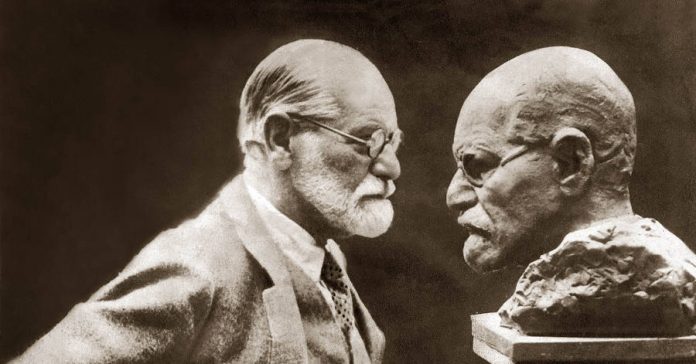
In his 1997 work (Miller, 1997), Eric Miller, reflecting on what had happened at Tavistock over the half-century since the publication of the article “Human Relations,” describes the Tavistock Clinic as a symbolic Mother. While I was enrolled in a two-year master’s program in organizational consulting, I visited the clinic once a week. Toward the end of my studies, a statue appeared on the clinic grounds, right in front of the main building. And every time I walked past that statue, I felt a surge of emotion, as if something were being released from my subconscious. It was a statue of Sigmund Freud. He was seated, his hand propping up his chin, as if deep in thought. He looked very fatherly. The sculpted Freud gazed into the distance, turning away from the clinic toward the outside world. It was then that I realized I had come to the Tavistock Clinic as if to a mother—to learn, to go through experiences, to process them, and to reflect (in particular, on “maternal containment” J). And so, toward the end of my training, after a long absence, the “father” returned and became the link between the maternal—my learning process—and the outside world. The unconscious became conscious, and my new life was born.
Afterword
On Gender and Psychoanalysis
It is not my intention here to cover all the points of contention related to gender issues in psychoanalysis. It is important to note that, from a psychoanalytic perspective, both men and women can equally occupy the paternal or maternal positions; the roles themselves have no gender. However, gender terminology creates problems (Zakin, 2001). Lacan, moving away from Oedipal dynamics in his later works, emphasizes that the Law of the Father and the Name of the Father are merely symbols. But even when speaking of positions, we cannot avoid master-symbols—“maternal,” “paternal,” “the Name of the Father,” “the Law of the Father”—all of these formulations are gendered. The final question I would like to leave the reader with is this: can psychoanalysis continue to use the symbols “paternal” and “maternal” if they—albeit unintentionally—reinforce gender stereotypes? Our tendency to label what is associated with the reality principle, structure, and the external as “paternal,” and what relates to emotions as “maternal,” seems so outdated in the modern world, where the concept of gender has changed and gender fluidity has emerged[6], and social roles and identity are perceived differently. (Butler, 1990, 2004). Psychoanalytic theories are based on social roles and contexts of the past, but our understanding of them is rarely revisited. They take us back to Vienna in Freud’s time or to the ethics of the 1950s, when gender boundaries were much clearer than they are today.
I believe this work will be useful in the search for theoretical and practical applications of psychoanalytic concepts such as “containment of conscious and unconscious anxiety,” “working with affects and emotions,” and “linking the internal and the external.” I am confident that the conscious and unconscious dynamics of the two positions referred to here as “maternal” and “paternal” can be explained using different language and symbols. We can speak of libidinal economics, study unconscious investments, and examine the drive toward authoritarian and controlling positions. We can explore the social constructs that shape the public, organizational, and political agendas. All of this no longer needs to be “Oedipal.” That horse has long since bolted (Deleuze and Guattari, 1972).
This is an updated version of my earlier work (see note 1). Perhaps in its next iteration, a new language will emerge for these concepts.
Additions:
In 1999, I presented my first academic paper, titled “Well, Where’s Daddy?”, at the annual ISPSO[7] symposium in Toronto. In it, I expanded upon the arguments of my master’s thesis, defended at the Tavistock Clinic, which, in turn, was based on the experience of a specific project and two years of practicing the Tavistock (Kleinian) approach in organizational consulting. This text is a reflective reworking of that earlier material.
In the analytic space, the analyst does not occupy a gender-fixed position; the patient’s transference onto the analyst can be either paternal or maternal, and may even shift several times during a single session. The same applies to agents of change within an organization. A male leader can be an excellent maternal container, while a woman can be a paternal one.
Notes:
[1] Reverie is a concept introduced into psychoanalysis by W. Bion. Bion proposes the concept of reverie as a component of the mother’s mental functioning in her containing capacity—a mental state in which alpha functions allow for the experience of a dreamlike flow of associations, feelings, and vague daydreams. The same is presumably generated in the analyst when meeting with a client. Group analysts suggest that there is a collective “group reverie,” which is jointly created from the combination of group members’ associations during the discussion of the presented material within the inner world of each participant.
[2] P-M-P (English) — paternal, maternal, paternal
[3] Simon uses his own term, “paternal agency.” Agency is intentional (social) action; according to E. Giddens, it is “the ability of people to act independently of the constraints imposed by the social structure.” In social psychology, agency is understood as a person’s intentional influence on their own functioning, environment, life circumstances, and destiny—as opposed to the view of a person merely as an object of influence determined by circumstances, rules, and internal impulses. For more information: International Encyclopedia of the Social Sciences 2008, Thomson Gale (https://www.encyclopedia.com/social-sciences/applied-and-social-sciences-magazines/psychology-agency)
[4] Egalitarianism (French égalitarisme, from égalité—equality)—a concept based on the idea of creating a society in which all members have equal rights and opportunities. The opposite of elitism
[5] Groupthink is the tendency of individuals to suppress their own views on a particular issue in order not to disrupt the harmony of the group.
[6] Gender fluidity — a gender identity that varies from time to time. People with this identity may identify as male, female, or non-binary.
[7] ISPSO—The International Society for the Psychoanalytic Study of Organizations; Simon Western is currently the president of ISPSO. https://www.ispso.org
The original work was translated by S. Belukhina in collaboration with A. Kan.