Ingmar Bergman’s “Summer with Monika”
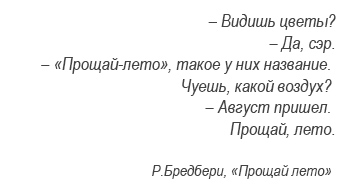
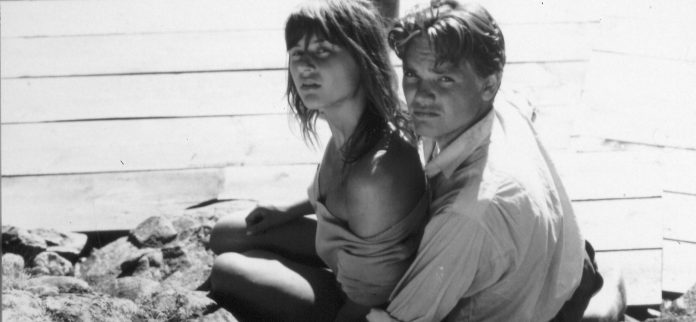
“Summer with Monika”—Ingmar Bergman’s international fame began with this 1953 black-and-white film. The film gained recognition not only in Sweden but also in romantic France, Italy, Spain, and other countries.
This popularity may seem surprising, since the story told in the film is rather ordinary—two people fall in love, run away from their parents to the countryside, and spend the summer sailing on the father’s boat across Swedish lakes; later—in winter—they have a child, and in the spring they go their separate ways…
It’s a story familiar to many young couples. However, this isn’t the only reason the film resonates so deeply with audiences, nor is it solely due to the eroticism with which it is imbued. The film has an unusual ending, and it’s intriguing. Monica, the mother, runs off to a new relationship, while Harry is left to raise their young daughter on his own.
Perhaps it is precisely this boldness on the director’s part—to reveal the essence of men and women to the viewer in a new light—that elevates the film from the category of a run-of-the-mill erotic saga to the ranks of the finest examples of world cinema classics.
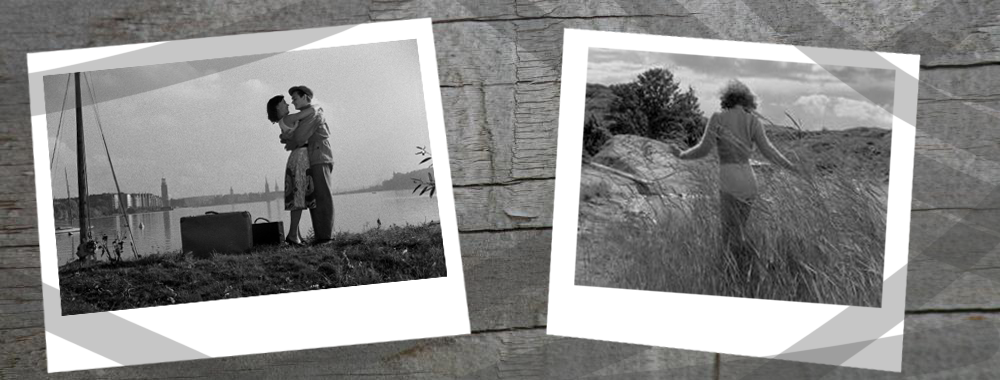
In terms of narrative style, Summer with Monica may seem a bit simplistic and naive to modern audiences. That’s what happens when you look at old photos or read school essays years later.
“How did I spend my summer?” – Well, how, how? I spent it… The imagery is clumsy, the sentences are awkward… The attempts to explain the inexplicable are unpretentious… And only from the future can one see how words were lacking back then, and how the ones that were available weren’t enough to describe the entire universe that opens up to a young person in a single summer during their youth.
The young Bergman—he, too, is the sea connecting two shores in June’s Summer with Monica, and the bridge linking two worlds in July. But by August, Bergman is a mirror that, through the image of Harry holding a child in his arms, reflects back to us, the viewers, something that overturns our familiar perspective on our own selves and offers a new understanding of the hidden motives of human beings.
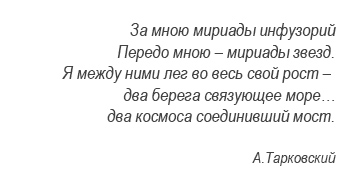
From the film’s title alone, we understand that the central figure in Bergman’s work is not even the young couple—though they are there as well—but rather the woman: Monica. Alternatively, Nika—meaning “victory”—or Mona, which means “the one and only.”
Monica is that very monad—the first, the divine, the unique—with whom every person has their own inexplicable connection and their own cosmos.
When we speak of the “first” woman during a psychoanalytic cinematic journey, we are always referring to her—the mother, the first woman in every person’s life.
Art historians are very fond of categorizing male directors into “feminine” and “masculine” types. “Masculine” directors, such as Tarkovsky, Kurosawa, and Orson Welles, are interested in the world of men: in their work, they explore themselves and the essence of masculinity. Then there are others who are primarily drawn to female characters. And although the main character in a film may well be a man, we can’t be mistaken: the goal of these explorers is the very essence of womanhood. Among them are Hitchcock, Dreyer, Mizoguchi, and, of course, Bergman.
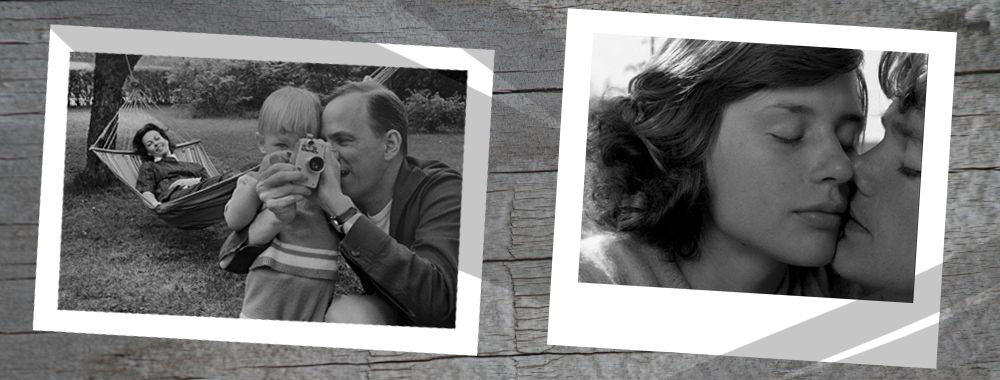
“The world of women is my universe,” the director said. “I have a hard time in it, but no man can boast that he has figured it all out.”
Bergman truly wants to understand it all and take pride in it.
His interest is shaped by his family history. His family was orthodox and Protestant. It was ruled by a strict father who was a pastor, and from the very beginning, young Bergman had to grapple with a certain paradox: despite the fact that a puritanical atmosphere reigned in the house and there was not even a hint of a sexual relationship between his parents… his mother was incredibly fertile. How did she manage it? A mystery.
Unraveling this mystery became Bergman’s life’s work.
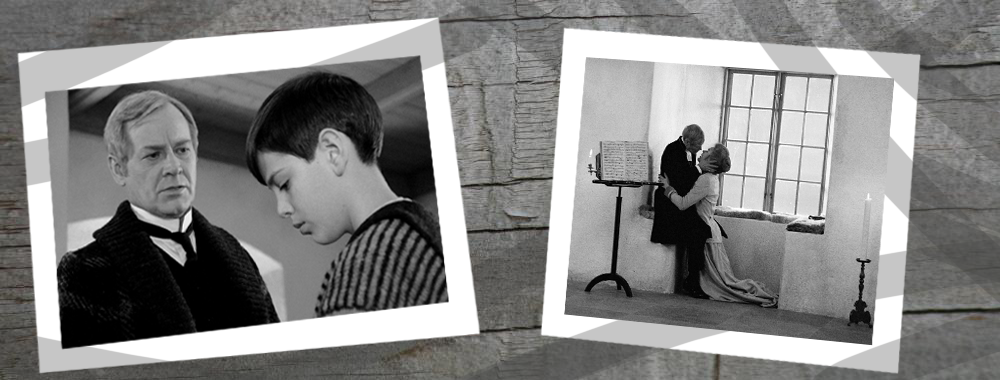
He would later write in his diary that at the age of sixty-nine, he sat with a photograph of his mother, studying her facial features through a magnifying glass. He was trying once again to convince himself that she had been beautiful and attractive, and he recalled how he had loved her as a four-year-old child, how he had shown her a devotion that was downright puppy-like. Unfortunately, his “puppy-like” tenderness did not evoke tenderness in her, but only annoyance and irritation. She rejected his love.
Such was Bergman’s beginning, and perhaps because of this, later on—as he grew up and fled from the haunting images of his strict father and unapproachable mother into his own summer, his own paradise, and the world of cinema—Bergman transformed this lack of love, this enormous deficit, into its opposite. His “plus” became a maniacal interest in all things feminine, hidden, and secret.
“Absolutely all women make a strong impression on me: old, young, tall, short, fat, thin… charming and plain… I also love cows, monkeys, sows, bitches… mares, hens, geese… hippos and mice….”
Bergman had many women in his life. But did he manage to build a bridge between such worlds as passion and love, romance and long-term relationships? Or was his only lasting connection with the “factory of dreams”?
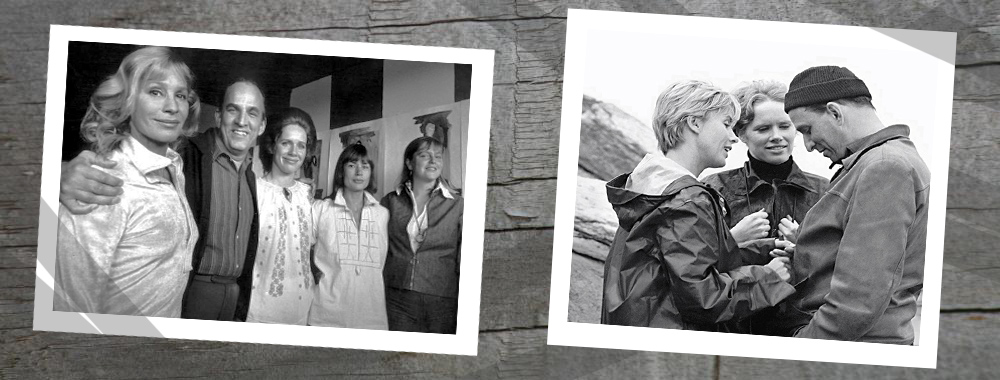
Psychoanalysts say that if a man is interested in all women at once, then perhaps none of them interest him… Or put another way: many at once—that is precisely The One, the very first one.
When such a man enters into relationships with new women over and over again, he may be driven by an unconscious desire to reestablish an early, positive relationship with the image of his mother. But the confusion between the images of his mother and his lover prevents him from succeeding in this.
Establishing this distinction in a boy’s psychological landscape during childhood is usually aided by a sufficiently good father, but Ingmar’s father was too strict, and in adulthood, as far as is known, the director did not consult a psychoanalyst to explore his experiences. For many years, he took a roundabout path.
Bergman had cinema, his theater of shadows.
In this theater, that insatiable hurricane named Monica—which, as we see, looms over Harry from the very first frames of the film—is merely a cinematic symbol of the raging emotions of four-year-old Ingmar, directed at his mother, who constantly rejected him. A mirror image of this early trauma of neglect can also be heard in Bergman’s real love life, which was rich but intertwined with themes of devaluation and the same kind of rejection—only now it is not he who is being abandoned, but he who is doing the abandoning. For example, by the time Bergman was divorcing his second wife to marry his third, his future fifth wife had already given birth to their first child…
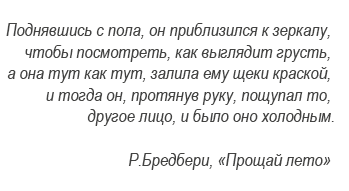
Bergman’s five wives, who had no connection to the film industry, and all of his actresses—who were almost always his mistresses—gave birth to a total of nine children for him.
And this seems to tell us that we should have no doubt—he is, of course, a man and a father. But Bergman is not simple; otherwise, he would not be a genius.
He is no stranger to another fantasy about himself, one that can hardly even be called unconscious. Jokingly, he sometimes calls himself a “lesbian,” thereby revealing a desire for female identification and triumphantly presenting this masculine version of fertility to the world.
Indeed, Bergman is considered one of the most prolific directors—he has made more than 60 films. Sometimes releasing as many as two films a year, at one point he even began to resemble that ant capable of “feeding and warming” not just one flighty Monica, but a whole swarm of dragonflies—both wives and mistresses.
To understand what is happening, let’s turn to the views of psychoanalyst Otto Kernberg, who, in his work Love Relationships: Norm and Pathology, argues that this type of personality organization originates in a child’s fantasy that he does not need a mother—that (oh, miracle!) he himself might just be that nurturing mother… For a boy, the consolidation of this fantasy is facilitated by the fact that he possesses a certain “giving organ,” which is, of course, a hundred times better than any mother’s breast—especially one that is often inaccessible. In the unconscious, the same confusion persists.
Why does a child need such a fantasy? Well, as always, to avoid confronting unbearable feelings: hatred toward the inaccessible mother, envy of a woman’s reproductive abilities, his own vulnerability, smallness, and dependence, and the impossibility of relying on the father figure because he is excessively punitive. All these feelings that make us human, not gods.
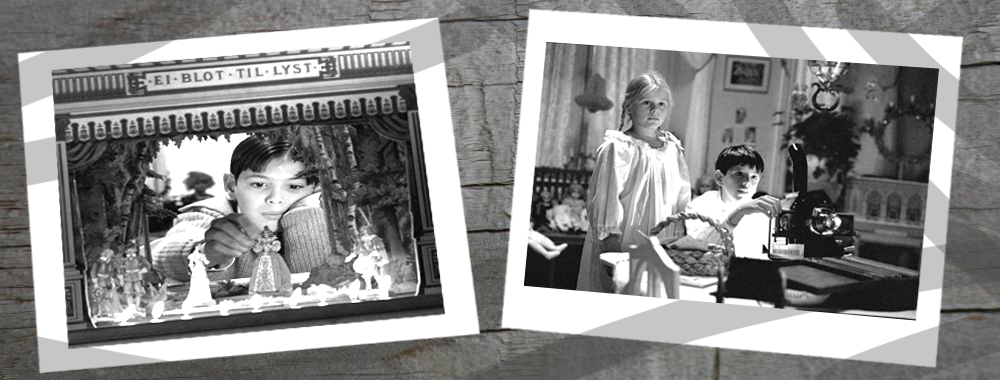
Sometimes a boy like this can preserve his imagination and liken this fertile mechanism to cinema itself—as a factory of ideas, films as children, and meanings as milk—and take control of it. And it’s great that such a possibility exists.
But, returning to Summer with Monica, let’s see how the characters coped with the end of their honeymoon period and the intrusion of reality. How do they both experience this hypothetical August—the month of harvest, of taking stock, and of responsibility for the grown crop?
By comparing Harry above to a fertile ant, we endow the lovely Monica with the traits of a carefree, wayward dragonfly, for whom “there are no longer any days as bright as those when, beneath every leaf, a table and a home awaited her.”
And indeed, she—a hungry older girl who, too, did not receive enough love in her large family—is unimpressed by Harry’s ant-like abilities. She rejects her pregnancy and her child—and, along with them, her passive feminine nature. She regains her active self, goes out to hunt for meat, and when her hunger intensifies, she leaves Harry’s child behind and walks away into another life, a new illusion.
In the end, each of the characters remains as they are. The necessary psychological shift does not occur. “He” and “she,” the masculine and the feminine, Harry and Monica—they freeze in an inverted perspective, fixed as reflections in each other’s mirrors.
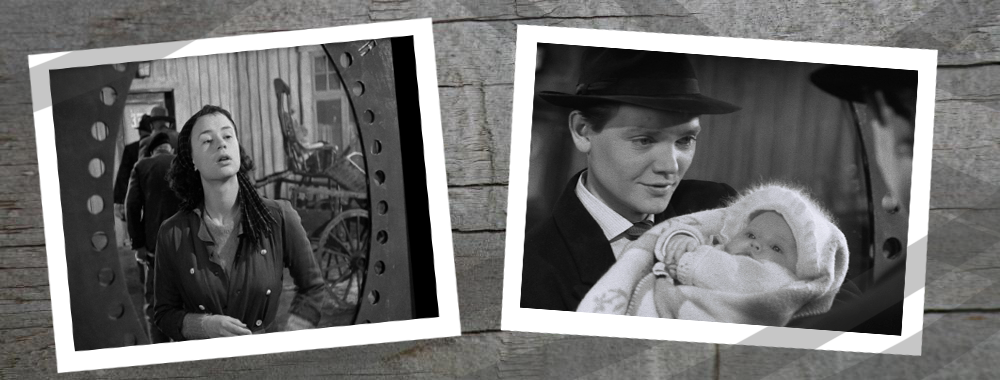
And as if to confirm this, at the end of the film we see the effeminate Harry, holding the little girl in his arms, looking into a mirror—he resembles a beautiful Madonna with the Child. Only the man’s hat looks just as strange on him as a suit and tie would on a feminist. The little girl, whom he deliberately names Monica—so we don’t get the wrong idea—is not Monica at all. She is little Harry himself, or even the tiny newborn Ingmar, held in his own arms or in the arms of his imaginary mother. Bergman always plays with reflections: the bubbly Monica is nothing more than Ingmar himself, yearning for love, while the feminine Harry is a reimagined image of Bergman’s mother, as he would like to see her.
Biographers say that the film Summer with Monica was inspired by Bergman’s own summer with Maerta—his first love, whom he met at his grandmother’s house in the countryside. His chaste romance with Maerta did not result in children—just as it did not for Monica and Harry—but in the end, Ingmar still found himself holding a small, delicate bundle in his arms; this film is one of his fantasies about what might have happened that summer.
But farewell, summer! Farewell, illusion. Bergman has more than 50 films ahead of him that will undoubtedly change him—and all of us.
Do you remember, dear reader, how you spent “your summer”? Was there a Monica in it, or another daring Eva with a piercing gaze? What color was the sky above you, what were her eyes like, what color was her hair? How did it all end?
Were you truly able to spend the summer, not get stuck in it, say goodbye, and move on? Now we know how important it is to do this, but did we know it when we were writing our essays…
Author:
Svetlana Belukhina, Master of Psychology, psychoanalytically oriented psychotherapist.
Reposting is welcome provided the author’s name and the source headology.org are cited.
*The article features stills from the films and behind-the-scenes footage from Ingmar Bergman’s Summer with Monika and Fanny and Alexander