The Film “The Goldfinch” as a Lesson in the Anatomy of Narcissistic Trauma
On September 13, 2019, the film adaptation of Donna Tartt’s novel The Goldfinch was released. The novel was written in 2013, and a year later, the author received the Pulitzer Prize for it.
Tartt spent 10 years writing this rather voluminous work, crafting it in such a way that from the very first pages, the reader is plunged headfirst into a leisurely, lavish narrative—part historical mystery, part family saga—only to emerge at the very end feeling a perfectly understandable sense of disappointment. For some reason, it’s impossible to remain forever within a story so rich in beautiful details without finishing it, without bringing it to a close…
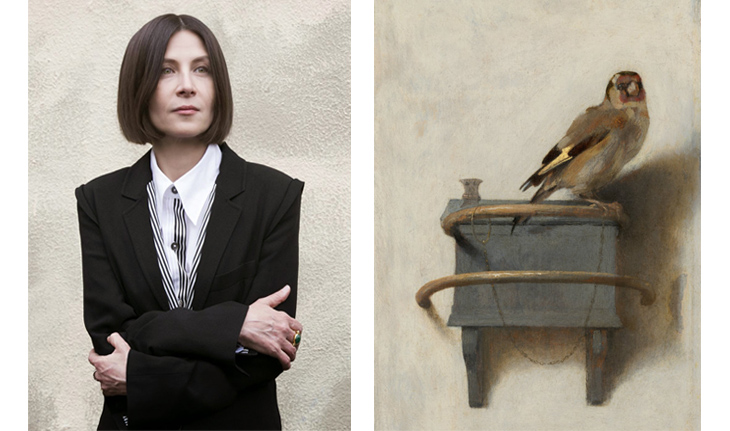
Donna Tartt and Fabritius’s painting The Goldfinch
The Novel vs. the Film Adaptation
When the novel was first published, critics compared it to the masterpieces of Bradbury and Dickens and proclaimed the return of great literature… Perhaps that’s why the film adaptation was immediately predicted to receive several Oscar nominations.
But today, the film is considered a failure. Critics and audiences dislike literally everything about it: the screenplay, the casting, the cinematography, and the musical score. Compared to the book, it all seems like a fake—just like that Frankenstein’s chest of drawers assembled by the restorer Hobart, which the young Theo Decker sold to a discerning buyer, passing it off as an original.
Why is there such a gulf between the book and the film? What was lost in the process of adapting the story, and is it possible to recover the lost meanings, just as Theo’s borrowed masterpiece was returned to the world?
Art vs. Psychotherapy?
One reviewer of Donna Tartt’s novel called the work as psychotherapeutic as art can possibly be.
That’s a bold statement. But how can a book that leaves you hanging in limbo—or a film that feels artificial—be psychotherapeutic? Let’s try to figure it out.
The first thing that happens in the film is that thirteen-year-old Theo loses his mother in an explosion at the Metropolitan Museum of Art. After the explosion, dazed, disoriented, and too afraid to look at the soft debris covered in ash, he finds a painting in the ruins. It is The Goldfinch by Fabritius, a student of Rembrandt.
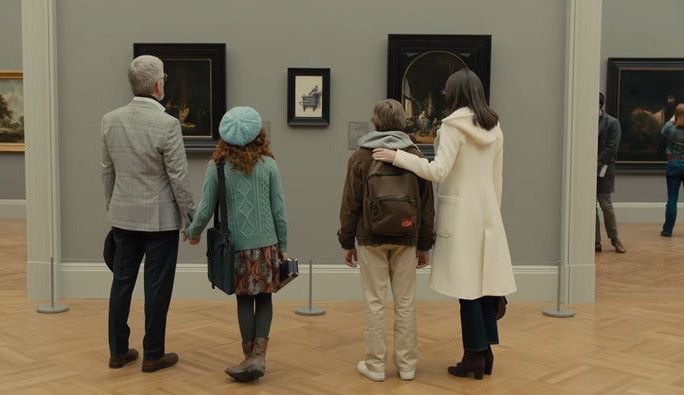
The painting, depicting a small goldfinch on a chain, has a strange provenance.
“The Goldfinch” survived two monstrous explosions—the first of which, in the 17th century, claimed the life of the artist himself. It is also significant that this was Theo’s mother’s favorite painting, and they had been looking at it together just moments before the explosion. And when she walked into the adjacent room to view Rembrandt’s The Anatomy Lesson, and Theo turned his gaze to the red-haired girl standing nearby, that was when the explosion occurred.
The painting, which art historians consider a “trompe-l’œil” creating the illusion of three-dimensionality, merged with the silhouette of Theo’s mother walking away and the image of the beautiful red-haired girl, the old antique dealer’s niece. And Theo found himself somewhere in the middle of it all…
After the explosion, Theo sees neither his mother nor the girl. The antique dealer, dying in his arms, urges the boy to retrieve the painting from the rubble to save it and return it to the world. Theo fulfills his request, but then secretly keeps the painting at home for many years, while everyone else believes the canvas is lost.
What was stolen, and when?
Is a theft actually taking place? After all, Theo’s intentions are good from the start.
We can only consider it theft from the moment the protagonist is unable to part with the masterpiece. It is precisely then that the painting becomes the sole existential anchor keeping his traumatized psyche from falling apart.
Theo Decker’s trauma seems obvious—the loss of his mother in an explosion. But the way he copes with this grief suggests that his trauma is earlier in origin. It is narcissistic. And the theft of the painting is now inextricably linked to the theft of identity characteristic of narcissists.
If we were to undertake a psychoanalytic reconstruction, we would see that long ago, the first explosion rocked the Metropolitan Museum of Theo’s psyche, and subsequent events merely became a belated metaphor for earlier psychological devastation. Alas, we do not even know for certain whether this psychological devastation occurred within Theo’s psyche or whether the Metropolitan Museum of Art exploded within his mother’s psyche, and the boy suffered simply by being, as an infant, a “museum of her psyche.”
Was Theo’s mother narcissistic?
It’s difficult to speak about narcissism, although this topic has been well-researched today, with many academic papers and popular articles published on it.
Each of us is narcissistic to some extent, after all, a child’s primary narcissism is the foundation of personality. It enables us to maintain self-esteem and a sense of “I’m okay, the world is okay.” Only later do the realities of life transform primary narcissism into more mature psychological structures. But if something goes wrong in early childhood, more harmful narcissistic traits eventually take center stage.
In the film, Theo’s mother is portrayed as an angel. We don’t know what kind of mother she was to Theo as an infant. We learn a little more from the book, where Donna Tartt describes her as charming but unstable, constantly quarreling with her alcoholic husband. This alone suggests that the family likely didn’t provide a sufficiently nurturing environment for the baby…
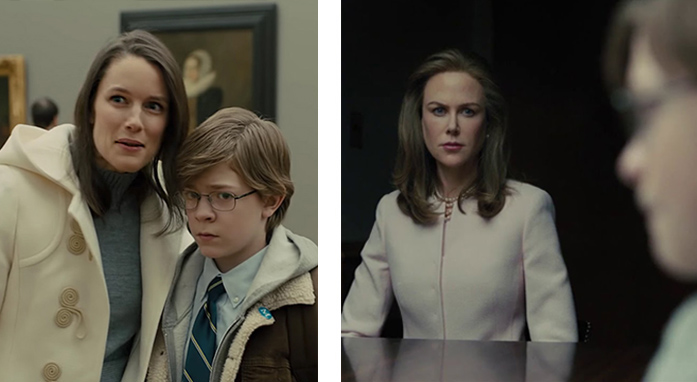
Two portrayals of Theo’s mother: his real mother and Mrs. Barbour
We can assume that Theo’s mother could not cope with the boy’s intense emotional experiences, since she herself was a troubled person; and, wishing to protect herself from strong emotions, she—instead of confronting her child’s real feelings—literally and figuratively led Theo through “a museum of her own ideas about what those feelings should be”…
I am alive because I am dead
The existence of narcissistic trauma is hinted at not only by the plot, but also by the viewer’s conflicting feelings toward the protagonist, which emerge as the film progresses.
For instance, one can feel a wide range of emotions toward Theo as a boy. But the feelings toward the adult Theo, the antique dealer, are boredom and irritation. It seems impossible to sympathize with him, even when he contemplates suicide.
Out of habit, we still continue to feel sorry for him, but our distrust and the sense that he is a monstrous fraud continue to grow. The director seems to be inviting us to feel the difference between what is real and what is fake, just as Hobart suggested that Theo run his hand over the rough back of an antique chair and then compare it to the polished board of a modern one.
The viewer, too, is beginning to sense the difference—able to distinguish the living from the lifeless—but isn’t quite sure yet.
It is likely this contradiction that causes irritation, leading one to think the problem lies with the casting. However, the choice of actor can actually be called a success! Ansel Elgort, who plays adult Theo, brilliantly wears a “narcissistic mask” characterized by arrogance, mechanical behavior, rehearsed emotions, and a knowledge of “what’s expected and what’s proper.” He presents a false “self” instead of his true feelings.
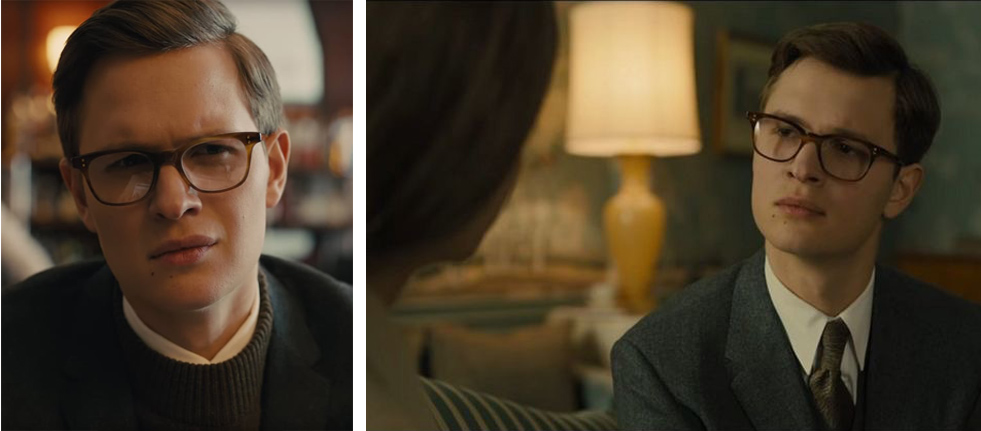
Ansel Elgort as adult Theo
Adult Theo knows how to present himself in high society, how to wear tailor-made suits properly, how to display impeccable manners, and how to keep his true feelings locked away (just like the stolen painting in a steel bunker). But when he finds himself in an unfamiliar, unprepared-for situation, he breaks down, his mask slips, and we see just how fragile and vulnerable he really is.
It’s not entirely accurate to think of Theo as the kind of self-obsessed narcissist described in popular articles—a person in love with his own reflection. Narcissism is understood in a broader sense.
For example, psychoanalyst Ronald Britton, in his article “Narcissism and Narcissistic Personality Disorders,” provides a detailed overview of existing approaches to this phenomenon. And, following his lead, we too will be interested in that “force or innate tendency within the personality that hinders the subject’s relationships beyond the boundaries of the self.”
If a narcissist is in love with themselves, then why, it would seem, are they unhappy?
There is a common belief that it is precisely this self-love that prevents the narcissist from forming connections with other people. But Theo, as we see, successfully forms such connections—both the film and the book are full of extraordinary characters with whom he is connected and into whose life stories he immerses himself. However, these connections are of a very specific nature and are far from healthy or satisfying.
For example, after the terrorist attack, Theo immediately thinks of Mrs. Barbour, his friend’s mother, hoping to find help and the maternal love he has lost in her. But this woman turns out to be unemotional and cold. For a while, Theo manages to live in her house-museum, filled with lifeless but beautiful objects—which, for Theo, is still better than nothing—but he never finds love there. Mrs. Barbour herself seems like a museum exhibit in this house—a sort of daguerreotype of a woman who was once alive, now hardly capable of spontaneous, genuine emotional expressions.
Then Hobart, a restorer, enters Theo’s life—a warm, skilled craftsman who helps distinguish the living from the inanimate and the original from the fake. Hobie is a symbolic figure of a psychotherapist—and he could have become a solid foundation for the protagonist’s revival of human affection for others, but for some reason, he does not. My colleague Maria Volkova attempts to unravel this mystery in her article about the film.
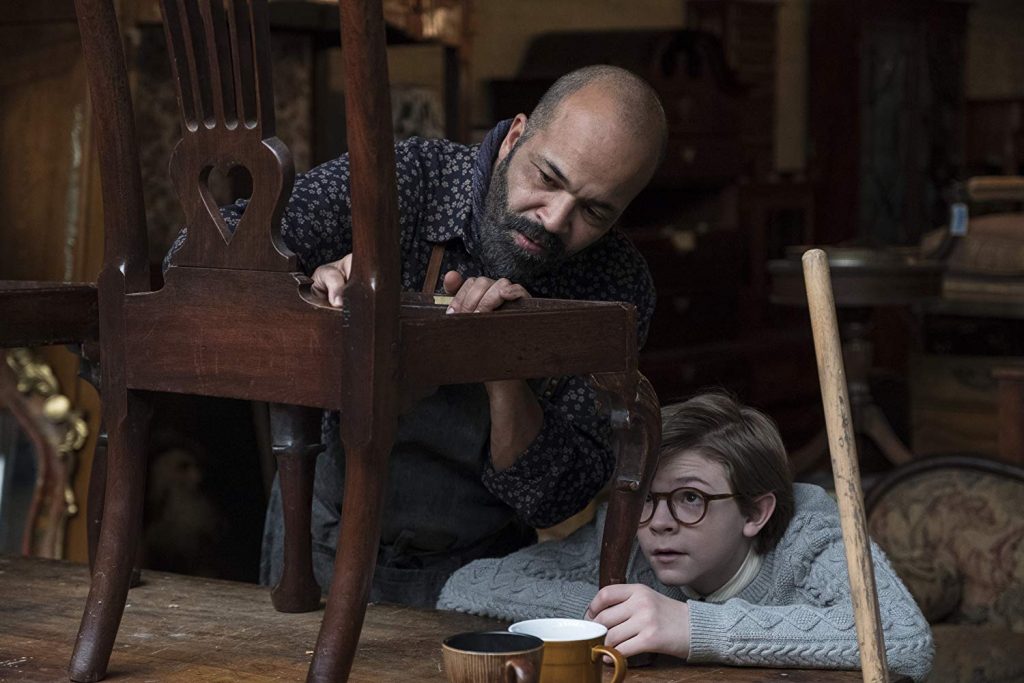
In Hobi’s restoration workshop
Pippa, the girl Theo saw in the museum just before the explosion, initially appears to be the one who will help the protagonist overcome his trauma. But she is just as much a survivor and just as traumatized. Two voids cannot fill each other.
The protagonist is constantly seeking help but cannot find it. Just as when he wanders through the bombed-out museum, saving others but finding no rescuers for himself. Rescuers seem to be somewhere nearby, but either Theo is unable to accept help, or he is “invisible” to them and they cannot find him. That much-needed encounter never takes place.
Therefore, on his journey from person to person, in his quest to find someone who could help him heal, the protagonist crosses the point of no return.
Theo’s biological father, who abandoned him long ago, appears in Mrs. Barbour’s living room. By virtue of their blood ties, he takes Theo to live with him in an uninhabited and remote settlement on the edge of a scorched desert. Swearing, alcohol, drugs, and his father’s romantic relationship with a woman—these now fill Theo’s emptiness, just as they did in his early childhood.
If up until this point we could still hope that things would work out for Theo and that help would come, then in the desert—which, in essence, is a metaphor for the protagonist’s barren relationships and mental hell—the viewer, along with the protagonist, loses all hope.
“I wonder if we’ll be completely buried here?” Theo asks himself one day as he pops a handful of pills. At this moment, the protagonist is more dead than alive. Mentally dead, in order to survive physically.
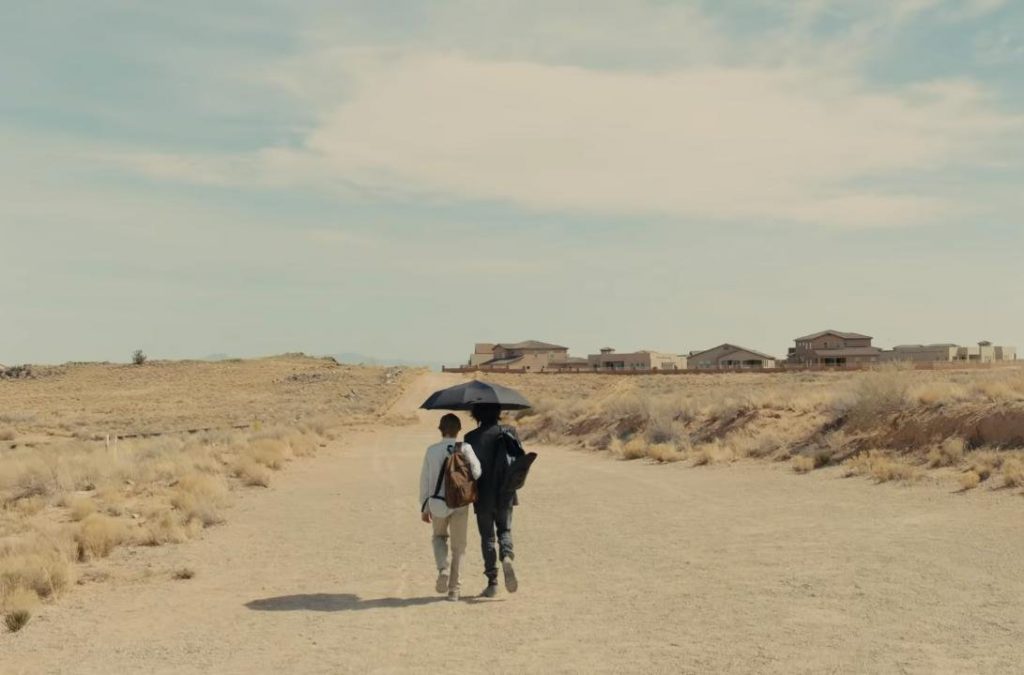
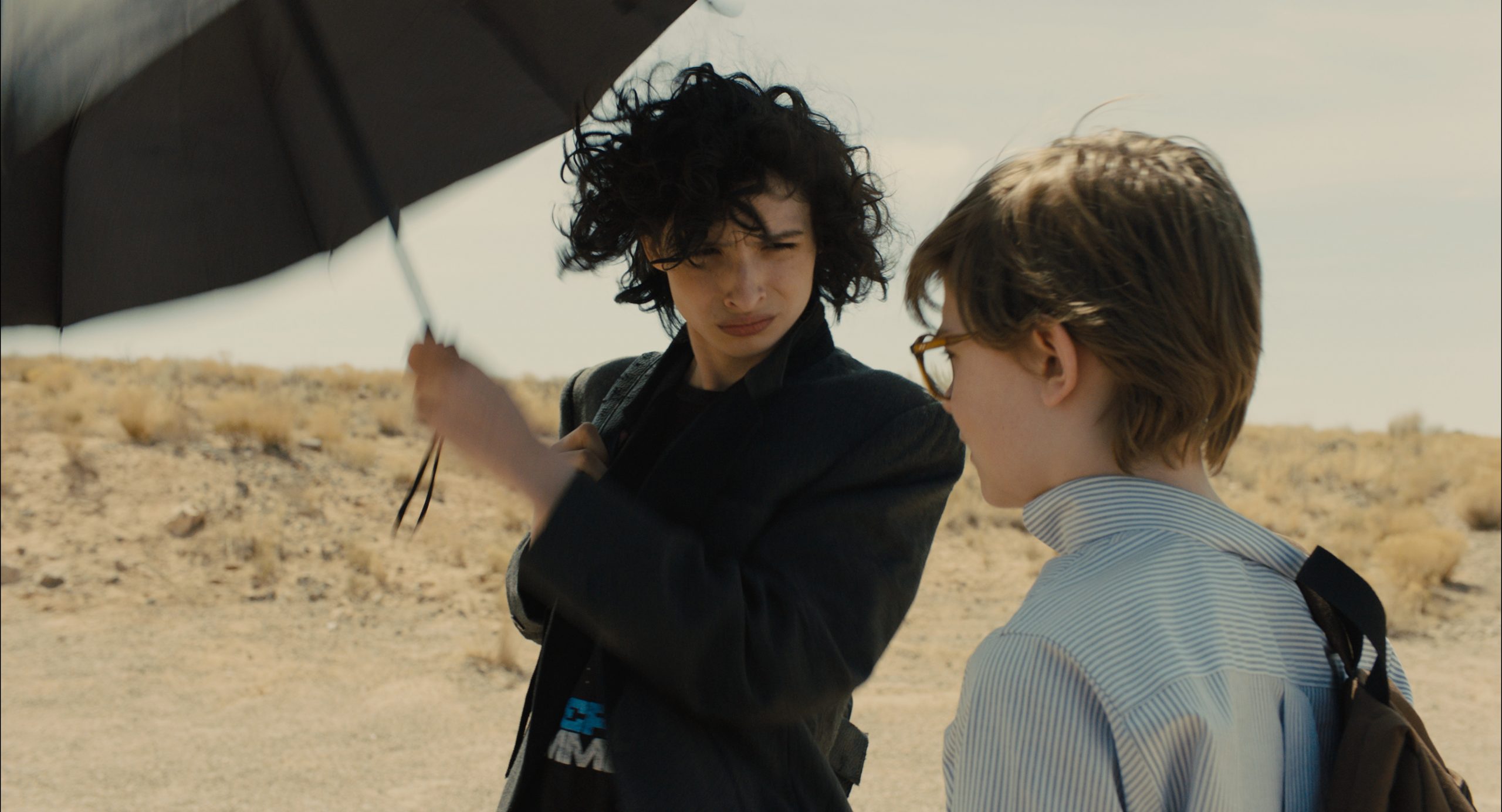
Theo and Boris at the edge of the desert
Bonnie and Clyde or Romeo and Juliet?
Let’s consider what the Theo-Boris same-sex dyad represents. This couple is cemented once and for all when Theo’s father betrays Theo’s interests by attempting to divert money from the boy’s educational fund for his own schemes. It is then that Theo finds refuge in his tender relationship with Boris.

In his article on the defense mechanisms of narcissism, Ronald Britton asks whether there is a difference between libidinal and destructive narcissism, whether a balance of loving or hostile forces is established within the narcissist’s psyche, and to what extent the fantasy of a twin soul plays a significant role in this… He also cites a variation of the myth of Narcissus in which Narcissus believes he once had a twin sister and that it is her reflection he sees in the lake.
Britton notes that a child, having lost hope for a satisfying, fulfilling relationship with a real other—ideally the mother—channels their energy into creating the idea of a mythical twin soul. In the future, any traumatic events may lead to the “avatar” for this fantasy being found in reality in one way or another, just as Theo found Boris, and Boris found Theo. Another prominent psychoanalyst, W. Bion, believes that Pirandello might have called such a fantasy “a character in search of an author.”

As he grows closer to Boris under the influence of anesthetic drugs, Theo finally reveals his greatest secret to him—he tells him about the painting. He hadn’t even confessed this to Hobi, but he confides in “his twin.” In doing so, he effectively reveals the secret of his emotional catastrophe, as well as his forced identity theft…
O. Kernberg, in his article on “The Intermittence of Relationships,” mentions such twin dyads, which can serve as the “skin” (D. Anzieu) of a couple or an ark of romantic intimacy, but in which intolerance for discontinuity—for the impermanence of the relationship—leads to the ark becoming a psychological refuge, as described by Steiner, where hatred and destruction are harbored and thrive.
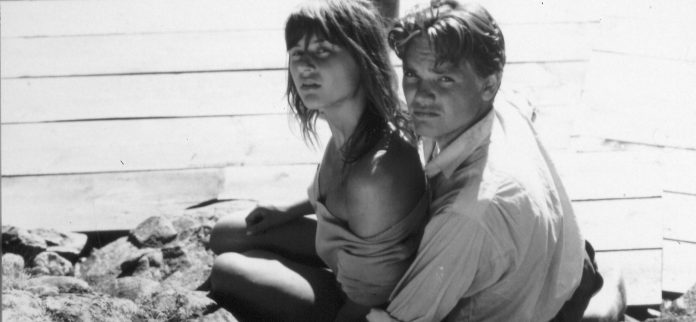
Such narcissistic couples, Britton notes, may follow the Bonnie and Clyde scenario if destruction prevails, or the Romeo and Juliet scenario if libidinal feelings gain the upper hand. The psychoanalyst also points out that, unfortunately, “death lurks in both scenarios: in one, the partnership is based on a shared love of murder, and in the other, death is preferred over a life without the love of the other.”
Both in their youth and in adulthood, Theo and Boris drift between these scenarios, sometimes donning the black masks of Bonnie and Clyde, and other times merging in the deathly kiss of Romeo and Juliet. Theo Decker idealizes death, while Boris heroizes it.
At the moment of yet another narcissistic breakdown for Theo, Boris re-enters the scene—a matured gangster with moral principles. And their twin bond once again pulls the hero out of his destructive pit. Another colleague of mine, however, sees the Theo-Boris duo as similar to the pairs of Tom Sawyer and Huckleberry Finn, Malysh and Karlsson, as well as Pippi and Tommy with Annika.
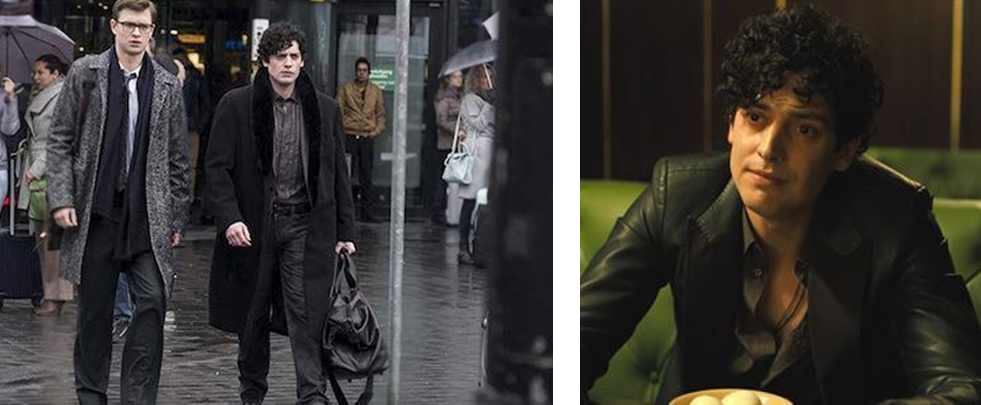
The next explosion doesn’t happen… Has the second bomb been defused?
Upon meeting Boris as an adult, Theo learns that Boris hasn’t owned the painting for many years. While in a drug-induced haze, Theo showed the painting to Boris and lost it then—a fact he doesn’t remember. The bunker is empty, and all these years Boris has been using the canvas as collateral for various criminal operations.
Any moment now, the acute narcissistic shame stemming from the realization of his own emptiness and falseness will trigger the final countdown and shatter either Theo’s mental repository or his mental refuge. The narcissistic pendulum swings so rapidly that the viewer can barely keep up with the shifts in amplitude and the twists in the plot.
But how symbolic—for the narcissist, upon discovering his own emptiness, only at that moment begins the journey from his dead self to his living self.
We know from the book that a second bomb had been planted at the Metropolitan Museum of Art; there was supposed to be a second explosion. Fortunately, it was defused. What, then, was this second bomb in Theo’s life, and how was it defused?
The second bomb seems to be the suddenly revealed fact that the painting, so closely associated with the image of his mother, not only does not belong solely to Theo, but is also entangled in a sordid affair! The transformation of the Madonna into a harlot could completely destroy Theo’s life.
Although this discovery is almost unbearable for his psyche, a second explosion does not occur. Boris’s criminal connections—or, as we might say, the tenuous connections of the psychiatric asylum—help arrange things so that the painting is ultimately returned to the museum along with the other stolen masterpieces…
A happy ending? A miracle? Did the patient get up and walk away? Could it be that a conscience—the narcissist’s Achilles’ heel—has finally emerged? Theo informs Hobart of the painting’s return on Christmas Day…
The pendulum has paused, but it’s hard to trust this equilibrium. It still feels as though, while the hero wanders in limbo, a bomb is ticking somewhere. How many more like this will have to be defused? Enough for more than one story.
The Lost Thing Found: A Small, Fragile Narcissus in Great Literature
At first, we wondered just how therapeutic art could be…
Now we see that with her third work, Donna Tartt is giving us a master class in depicting narcissistic trauma, inviting us once again to attend a lesson in psychological anatomy and examine in detail how a narcissistically organized psyche functions.
The book, as someone has noted, resembles a frozen sculptural composition a second before an explosion. It is a monolith of barely perceptible states, hints, and images…
The film, however, depicts the horror of a psychological catastrophe more clearly; it does not mask it with excessive details or flimsy facades, and it is able to portray the catastrophe of both the author and her protagonist.
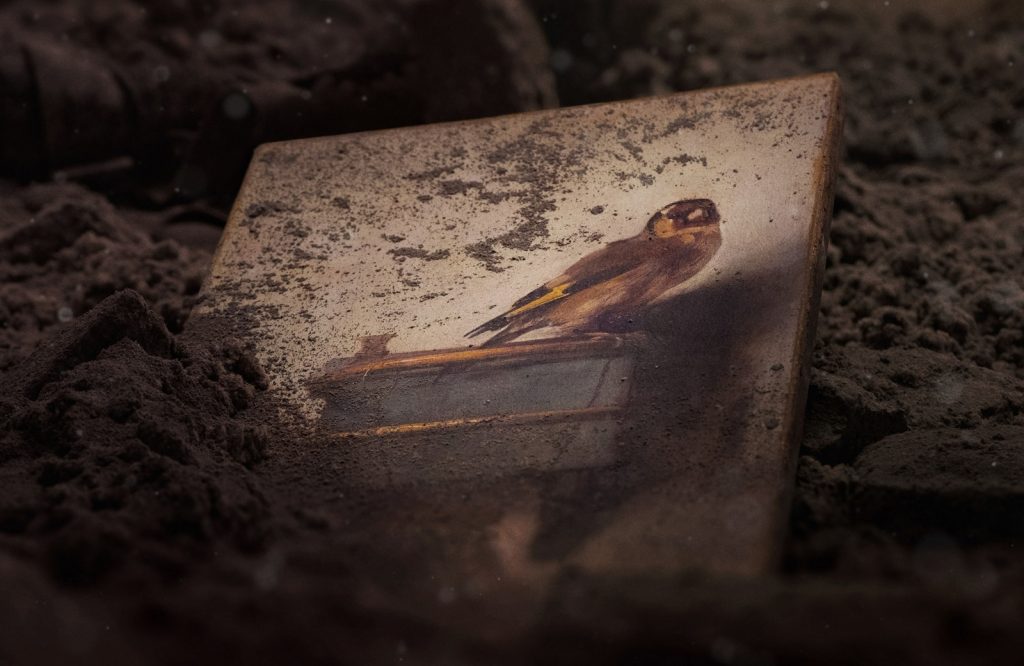
In any case, it ultimately becomes clear that Theo Decker’s tragedy lies in the fact that he was saved by a specific mental defense mechanism—on the one hand, this mechanism helped him survive physically, but on the other, it rendered his psyche nearly dead and incapacitated, resembling a scorched desert or a museum after an explosion.
And now we can imagine how much effort it will take to finally restore such a psyche so that an Encounter with the Other can take place.
Perhaps this is why even renowned psychoanalysts consider narcissistic clients to be among the most challenging, since the analysis constantly threatens to turn into a Bonnie and Clyde-style brawl or a Romeo and Juliet-style tragedy. But it is precisely narcissistic patients who, in turn, teach therapists a great, great deal.
And we can continue to think of psychotherapy as an art form—or that art can be psychotherapeutic… But according to Freud, Klein, Bion, and many other prominent psychoanalysts, our psyche—which gives rise to both art and psychotherapy—is constantly at work transforming what traumatizes us into certain representations that are easier to deal with than the tragic events that have already occurred. And the inner characters of this drama are constantly searching for actors in external reality who will finally play their parts.
After all, it is through fantasy and play that a person overcomes trauma, and when this happens successfully, there is no longer any need to cling to the old way of defending oneself against the horrors of the world; the defense mechanism itself can soften and open up more possibilities for life, no matter how severe the initial trauma may have been.
Donna Tartt’s immense achievement lies in the fact that, even though she “hid the truth in the basement”—confining it to the dungeons of fiction—she nonetheless restored the place of the narcissist’s small, highly vulnerable psyche in great literature, just as the painting of the goldfinch, borrowed by the protagonist, was returned to the world.
The author of this article is psychotherapist S.V. Belukhina. Read more…
Republishing is welcome provided the author’s name and the source http://167.235.57.68 are cited
The article features stills from the film The Goldfinch (2019) and images of Donna Tartt.
Additional sources:
Ronald Britton, Sex, Death, and the Superego: Experiences in Psychoanalysis, Karnac Books, (2003). O. Kernberg, Loving Relationships: Norm and Pathology (translated from English by M.N. Georgieva). Moscow: Nezavisimaya Firma “Klass,” 2000. Chapter 29. (2000). W. Bion, The Imaginary Twin (1967).
Share Twitter WhatsApp Telegram VK Svetlana Belukhina