Pedro Almodóvar’s Pain and Glory
“This is my last film,” he said at the Cannes presentation of his movie Pain and Glory*.
Camera, cut? The red color of the poster, like a traffic light, signals: no further movement allowed.
Maybe that really is it? Is there anything left he could share with the world? We don’t know yet. We watch and hope.
Inside…
Salvador Malo, an aging film director played by Antonio Banderas, is going through a creative crisis. He isn’t writing.
His emotional pain roams freely throughout his body, masquerading as very real ailments, but it simply cannot transform into either a new story or a new film.
Already in the very first scene, we gaze with a mixture of tenderness and revulsion at the protagonist, suspended in the weightlessness of the pool’s blue waters—this primeval beetle trapped in amber, with thick black tufts of hair blooming in his armpits.
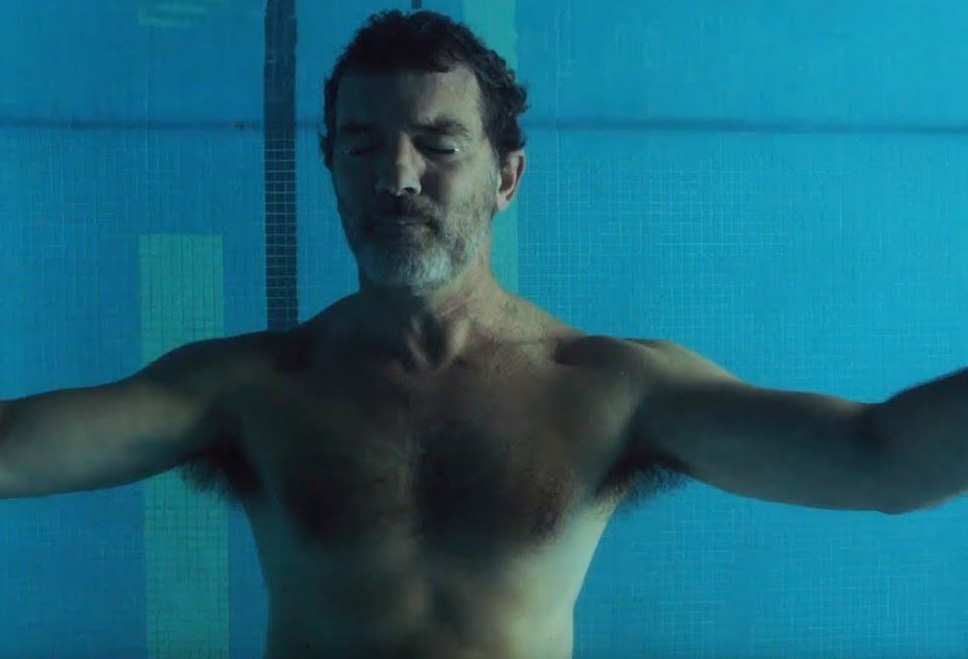
He hangs there like an overripe fruit in his mother’s amniotic fluid—an “infant,” a man with a already gray beard and a weary gaze.
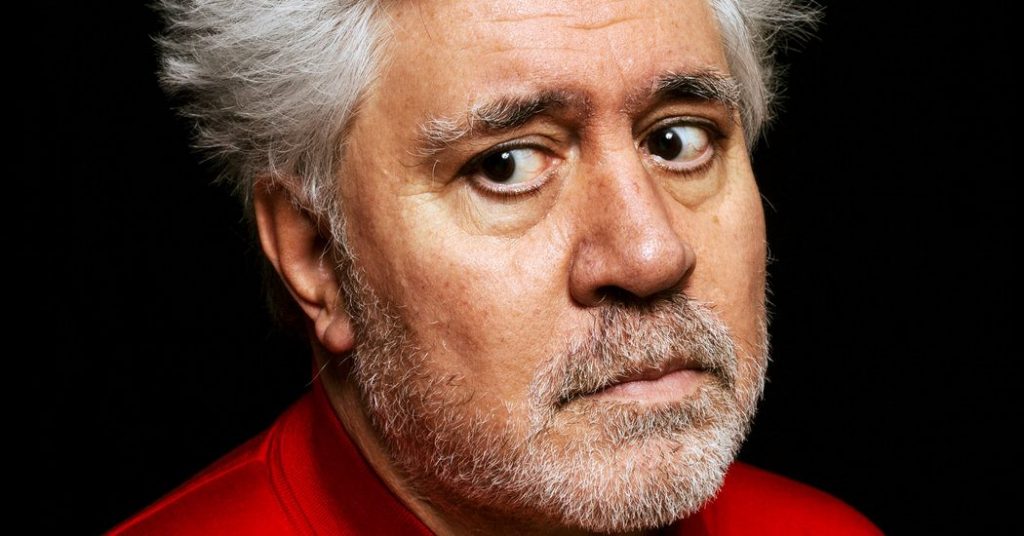
Almodóvar. That’s him! Time and again, he dives into his past and turns himself inside out to tell us once more something important about himself—and, in the process, about all of us.
It’s intimate—as intimate as it can possibly be. He’s so vulnerable and defenseless that it hurts; he’s incredibly honest. And the gaze of this Almodóvar-Maló… asks us to treat him with care. After all, he’s telling us about his childhood, about love, his first attraction, and the art that was born from it…
It’s also a story about feelings for the most important people in his life; about the encounters that life has blessed him with.
And about the most important Encounter of all. The encounter with his wonderful mother.
What do you do if your mother is Penélope Cruz?
The film’s title consists of two words: Dolor y gloria, Pain and Glory, “Pain and Glory.”
For the Russian release, the word “gloria” or “glory” was translated as “slava.” However, “gloria” isn’t just triumph—it’s also splendor. Beauty. Heaven on earth and unearthly bliss.
Well, what else could the relationship between a loving mother and her child be?
The memories of an eight-year-old boy are so enchanting that his adult reality—which, it must be said, is quite glorious—still pales in comparison.
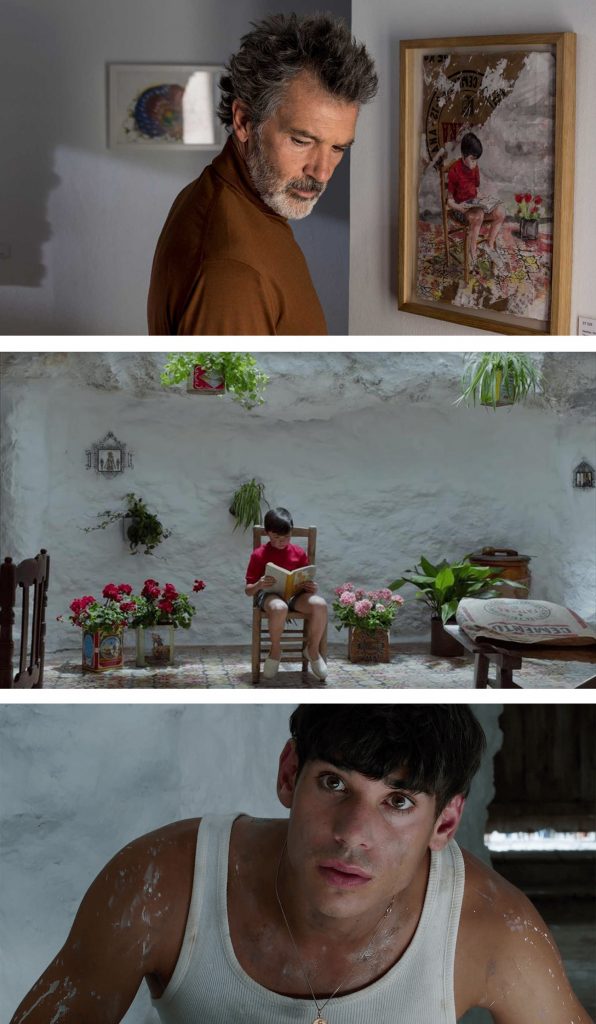
The scene where little Salvador, while washing clothes in the river, sees his enchanting mother (played by Penélope Cruz—the director’s muse) and hears her song—that scene is indescribably beautiful.

It has already been frozen in amber. There’s no escaping it, no matter how hard you try.
This is The Great Beauty**, eternal perfection. The charm of the body, the gaze, the tone of voice, the cadence, the meanings that unfold one after another…
It is also the beauty of the entire psyche, bestowed by an encounter with such a delightful person as a mother. Her presence fills one with happiness, love, and peace, while her absence is unbearable. How agonizing this longing can be, how immense the suffering!
The companion word—dolor or pain, translated as “pain”—also means “suffering,” “grief,” and, take note, “a splinter”!
It is precisely this psychogenic splinter lodged in the protagonist’s larynx that causes the suffocating symptoms from which he suffers and which he can only rid himself of through surgery (in the presence of the symbolic figure of the father, who is clearly absent both in real life and in the film).
Only by transforming this beautiful yet suffocating “splinter” within himself will Malo-Almodóvar be able to move forward and, we believe, open a new chapter in his life.
But before that…
Salvador Malo dives into his memories. In this way, he is reunited with—and at the same time bids farewell to—his wonderful mother.
According to the film’s timeline, Malo’s mother died two years ago. Almodóvar’s mother passed away back in 1999.
How does one go on when a mother leaves? In an attempt to come to terms with his grief, the director sketches out the contours of the body for us… Surely not everything can hurt? Or can it? We see that after losing his mother, the protagonist sinks deeper and deeper into a world of memories, and he does so with the help of drugs.
Here’s a scene at the train station, where he and his mother spend the night together; she feeds him bread with chocolate… A ridiculous combination, but how delicious it must have been for the boy.
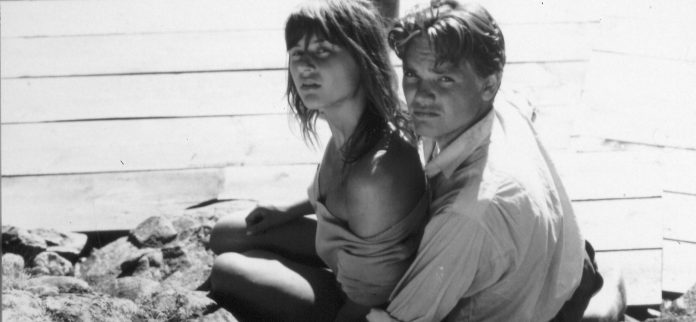
Then he moves to a cramped dugout, where the walls of the house will be whitewashed by his mother’s caring hands and become a magical screen for Malo’s awakening desires.
A village tiler, who dreams of becoming an artist, paints his portrait. Much later, Malo—now a cinematographer—will paint a portrait of the tiler, just as he remembers him.
Their connection was not physical, but it found expression in the realm of creativity. Here, it seems, lies the path to realizing the impossible. A light sketch that set the course.
Donald Meltzer’s Psychological Pain and Emotional Pleasure
Donald Meltzer—an American and British psychoanalyst of the Kleinian and Bionian schools—wrote a work in 1988 titled Apprehension of Beauty*****, which will be useful to us.
This work was co-authored with Meg Harris, his daughter, and Martha Harris, his beloved wife. Its publication is linked to tragic circumstances—Martha Harris’s prolonged illness and death—as well as Donald Meltzer’s attempt to make sense of this event.
In this work, he discusses how sensitivity to beauty influences the development of the human soul.
This human capacity to integrate the pleasure derived from the presence of beauty and the displeasure arising from its absence fundamentally determines the very possibility of being human—to feel deeply and comprehend the world, to explore the diversity of human relationships and their psychological content.
The attempt to connect the unconnectable—what was once fragmented—lies at the heart of the human capacity to tolerate uncertainty and misunderstanding, to endure the “veils of mystery” without the desire to lift them immediately. And if this attempt succeeds, the possibility remains to look beyond the horizon of events with curiosity and hope. But if it fails, it becomes a source of philistinism, puritanism, devaluation, and cynicism.
Meltzer was convinced that an ordinary, devoted, beautiful mother, welcoming an ordinary, beautiful child into this world, is indeed a reliable guide on the child’s journey toward understanding himself and the world.
And he also considered it important to overcome aesthetic shock and conflict in order to subsequently fill one’s life with pleasure and knowledge.
The essence of this conflict lies in the mystery of the object of passion—the mother—and in the realization that it is impossible to fully comprehend her.
It is precisely at this moment of realization that a person’s creative imagination and fantasy are born, enabling them to continue independently and consistently in their exploration of the universe and its mysteries.
According to Meltzer, it is the inability to withstand the blinding beauty of the world—that is, the mother’s meaning-generating capacities—that gives rise to all cases of psychopathology, as well as the full diversity of mental functioning.
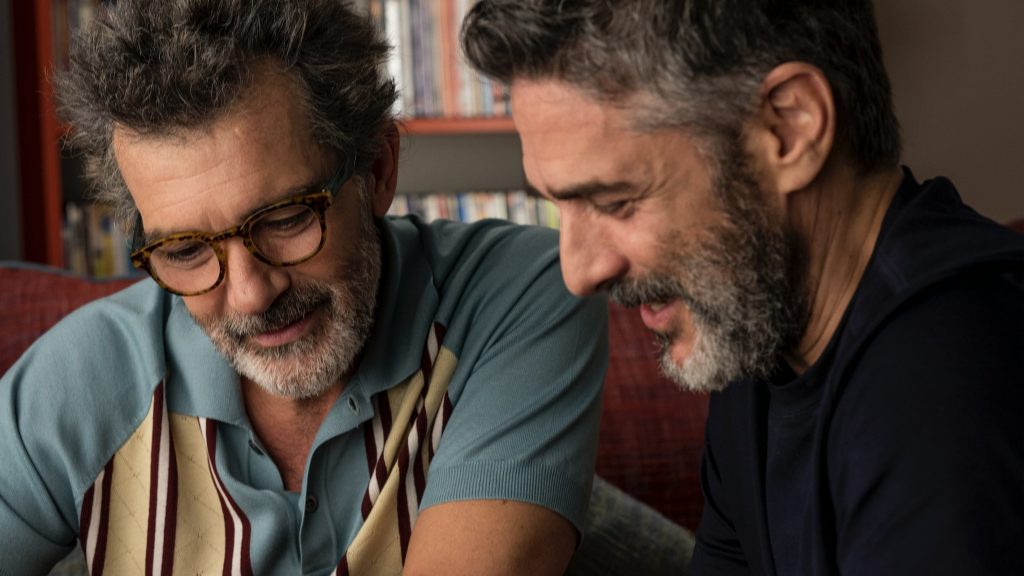
Indeed, we see that the protagonist chooses as the object of his passion a person of the same sex as himself. His attachment is strong and is called into question only when he discovers, years later, that Fernando, the object of his love, has long been in a heterosexual marriage. Fernando managed not only to overcome his drug addiction—from which Malo had always saved him—but also to discover within himself the ability to form a relationship with a partner different from himself.
So, have I told you everything about my mother?
Almodóvar made his first attempt to tell “All About My Mother” back in 1999****.
So why did he need this remix—the film Pain and Glory?
The answer may be closer than we think if we recall that Almodóvar’s earlier film All About My Mother is a reference to the film All About Eve—the favorite film of the main character, Esteban, who dreams of becoming a writer.
We might be surprised at just how close paradise and the first woman actually are to the present day***.
The Mother Addiction
Of course, it’s easier to avoid the influence of paradisiacal beauty and passionate intimacy with a person who is different from you—and who, as a result, not only captivates but also frightens you. But what emotional and mental strength does that require!
Is it even realistic, in principle, to break free from such an amber-like captivity—the choice of a partner based on attachment to another as if they were oneself?
After all, when the other is none other than myself, there are no differences. And that means there is no lack, no familiar disappointment, no sense of loss, and no suffering. It is eternal beauty and eternal life. But does such a thing ever happen?
His mother’s death reminds the protagonist of the harsh realities of life—that time marches on and he, too, is mortal.
Society also demands that he acknowledge the other’s distinctiveness—we learn that his partner from the first film has a different take on the script, and there’s nothing to be done about it. These differences cause emotional pain and call for creativity, but as we see, that creativity is on hold until the protagonist’s main psychological conflict is resolved.
Such an internal conflict can not only rob a person of the capacity for creative thinking and imagination, but even lead to total alienation from the emotional world of self-experience and one’s relationships with others.
The inability to endure the beauty of the mother-world, the lost or undeveloped ability to symbolize its absence, one’s own disappointment in it, the differences, and one’s own mortality, as well as an intolerance for the pain that all this engenders—these are the causes of creative stagnation or crisis.
In that case, the phrase “The muse has left me” can be understood almost literally—my mother has left and deprived me of the ability to understand myself and the world.
But when the muse leaves us… departs, dies… is there a legacy left behind? What is it? And will there be an opportunity to make use of it?
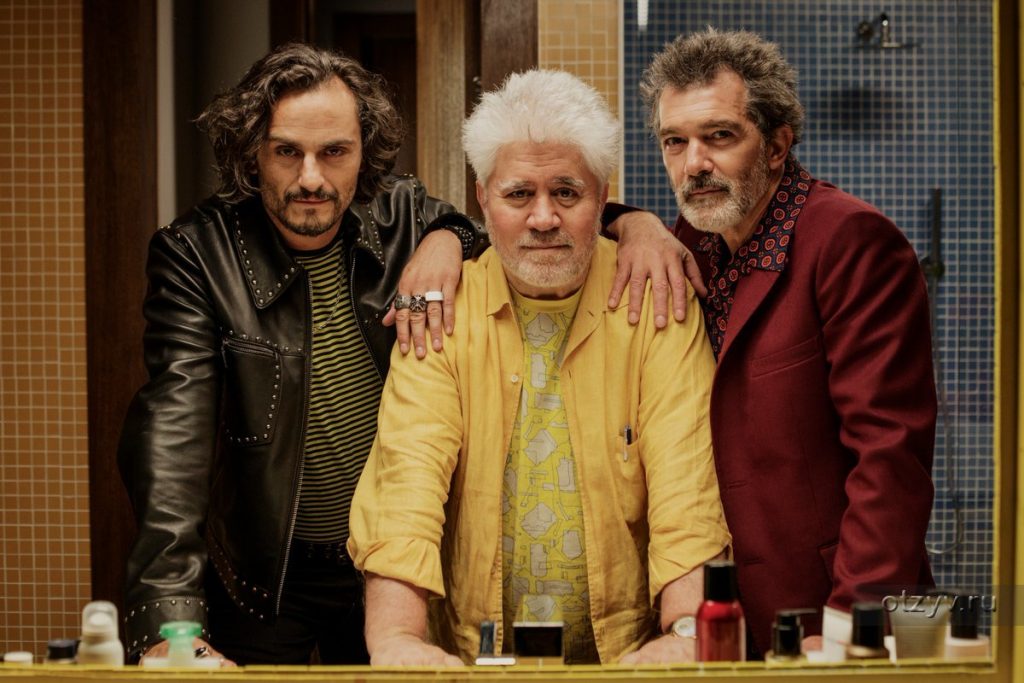
Malyo returns to his colleague, with whom he once made a successful film in his youth.
Another guy—though prone to addiction—is nonetheless able to tell Malo’s second story, The Addiction, dedicated to his friend and lover Fernando. Thanks to this, he and Fernando finally meet and are able to set the record straight.
Even in the absence of the Muse—les disaros—ideas and desires can still be born. After all, a mother is not only a distant and beautiful symbol of the past, but life itself.
Let us remember that this experience of interaction gives rise not only to pain, but also to admiration, tenderness, understanding, and—most importantly—the experience of beauty.
In fact, within any of our stories—whether adapted for the screen or not—and within any relationship, lie our first relationships with our earliest people. They are there forever. And no, there is obviously no single, exhaustive story that would express absolutely “everything about a mother” and serve as the definitive one.
That is precisely why, when at the end of the film Pedro Almodóvar’s character tells the surgeon on the operating table that he has started writing again, we believe that this story of his isn’t the last one either.
And really, is it even possible to say absolutely everything about one’s mother? It could take a lifetime… But it would be a creative life.
Psychological pain (if it does not degenerate into psychogenic disorders) gives rise to the spiritual joy of life’s beauty, and this is felt as the ultimate aesthetic reward that structures a person’s entire psychological life.
The film’s final scene—mother and son are together again at the train station. It seems as though we’re losing the protagonist; here he is, departing from life… But!
The camera pulls back: we see the film crew. Malo and Penelope are no longer together. The protagonist has crossed the threshold and is now making a film: what was inside is now outside, and, of course, may be less suffocating.
It seems that the unbearable pain—that lump in his throat—has either become bearable or has disappeared altogether, thanks to the supportive help of the father figure, the surgeon, and the inner work done by the protagonist himself. And who knows what symbolic role his mother’s legacy—that very wooden darning egg—played for Malo?
An old, holey sock… He managed to mend himself. Youth cannot be regained, but the wounds of the soul will be mended—even if with red thread.
“I’m writing again,” says Malo-Almodóvar to his surgeon… And we’re waiting for his new film.
Article authors:
Svetlana Belukhina, M.A. in Psychology, psychoanalytically oriented psychotherapist.
Maria Volkova, Master of Psychology, clinical psychologist.
Sources used:
*The film Pain and Glory, 2019
**The film The Great Beauty, 2013
*** Rafael E. López-Corvo’s work God is Woman, 1996
****The film All About My Mother, 1999
*****D. Meltzer’s work The Apprehension of Beauty: the role of aesthetic conflict in development, art and violence (1988)
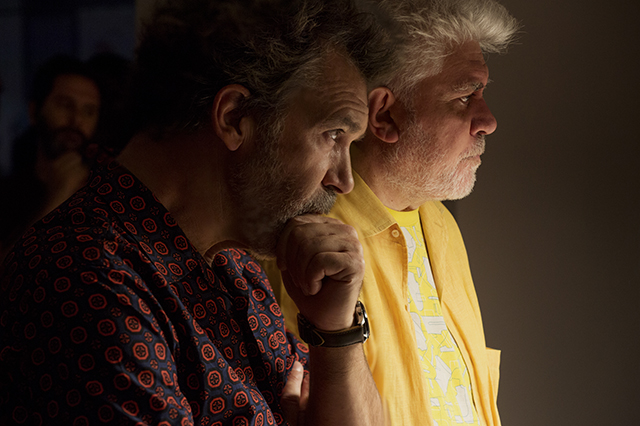
*This article features stills from the film Pain and Glory and behind-the-scenes footage from its production
Share Twitter WhatsApp Telegram VK Svetlana Belukhina